Address
304 North Cardinal St.
Dorchester Center, MA 02124
Work Hours
Monday to Friday: 7AM - 7PM
Weekend: 10AM - 5PM

Address
304 North Cardinal St.
Dorchester Center, MA 02124
Work Hours
Monday to Friday: 7AM - 7PM
Weekend: 10AM - 5PM

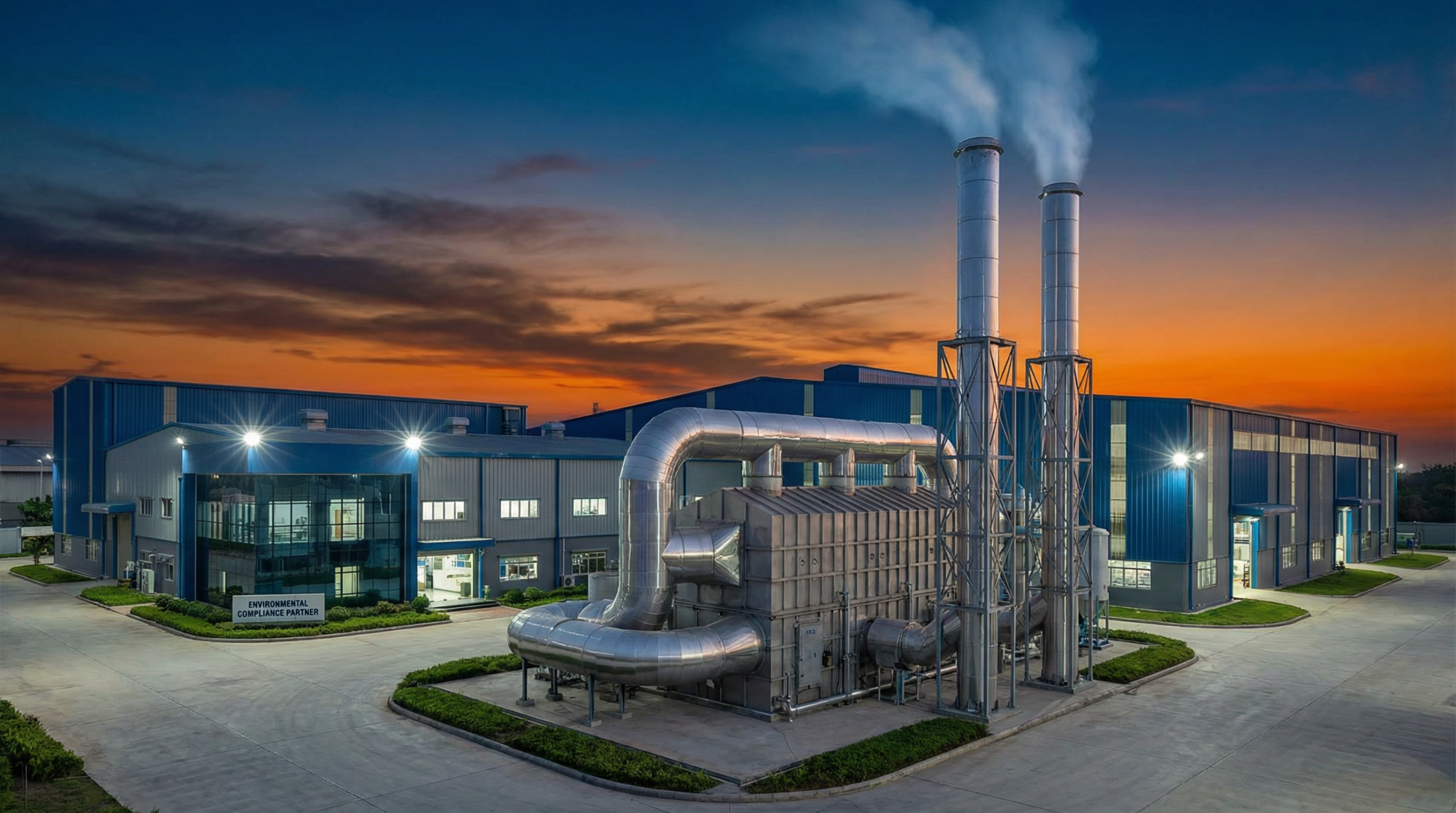
Engineered solutions for industrial VOC abatement, ensuring environmental compliance, operational efficiency, and optimized energy consumption. Our systems are designed for seamless integration into your manufacturing processes.
Industrial VOC (Volatile Organic Compound) treatment refers to engineered systems designed to remove or destroy harmful organic compounds from industrial exhaust air streams before atmospheric release. These compounds originate from processes such as coating, printing, chemical synthesis, and surface finishing, and are subject to strict regulatory limits in most jurisdictions.
Treatment technologies operate primarily on two principles: high-temperature thermal oxidation, which converts VOCs into CO₂ and H₂O, and media-based adsorption, which captures VOCs for subsequent destruction or recovery. Selecting the appropriate technology depends on exhaust volume, VOC concentration, and specific compliance requirements.
Core solutions such as Regenerative Thermal Oxidizers (RTO) are central to modern industrial VOC control applications across multiple sectors.
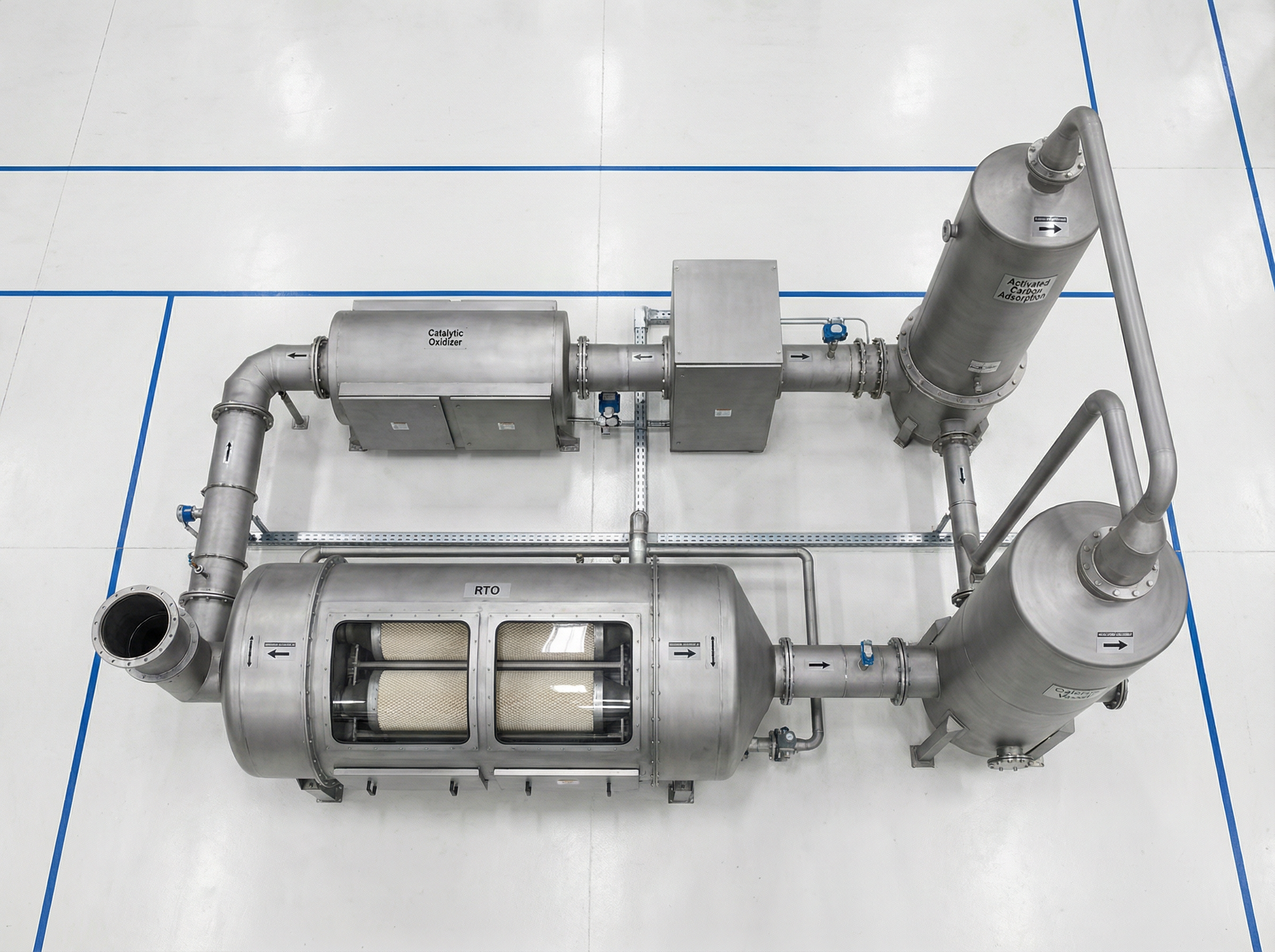
We offer a range of engineered VOC abatement systems, each optimized for specific exhaust conditions, concentration levels, and operational requirements.
High-efficiency thermal oxidation with ceramic heat exchange beds for exceptional heat recovery. Achieves VOC destruction efficiency typically exceeding 95%. Ideal for continuous industrial duty and variable VOC loads.
A catalyst lowers the required oxidation temperature, significantly reducing fuel consumption. Best suited for low-to-medium VOC concentrations where energy cost management is a priority.
Absorption-based systems that remove water-soluble VOCs and acid gases via contact with a scrubbing liquid. Frequently deployed as a pre-treatment stage integrated with other abatement technologies.
Activated carbon beds capture VOCs from the exhaust stream. Periodic regeneration allows for solvent recovery and reuse, making this system suitable for applications where solvent economics justify recovery.
Our VOC abatement systems are deployed across a broad range of industrial sectors, each with distinct exhaust profiles and compliance requirements.
VOC control for paint booths, coating lines, and adhesive application processes.
VOC abatement for solvent processing, chemical synthesis reactors, and storage tank vents.
Ink solvent recovery and dryer exhaust treatment for printing and packaging operations.
Control of etching, cleaning, and solvent fumes from PCB and semiconductor production.
Systems for solvent evaporation, API synthesis, and process emission control in pharma facilities.
General industrial exhaust treatment solutions for mixed-source VOC streams and plant-wide compliance.
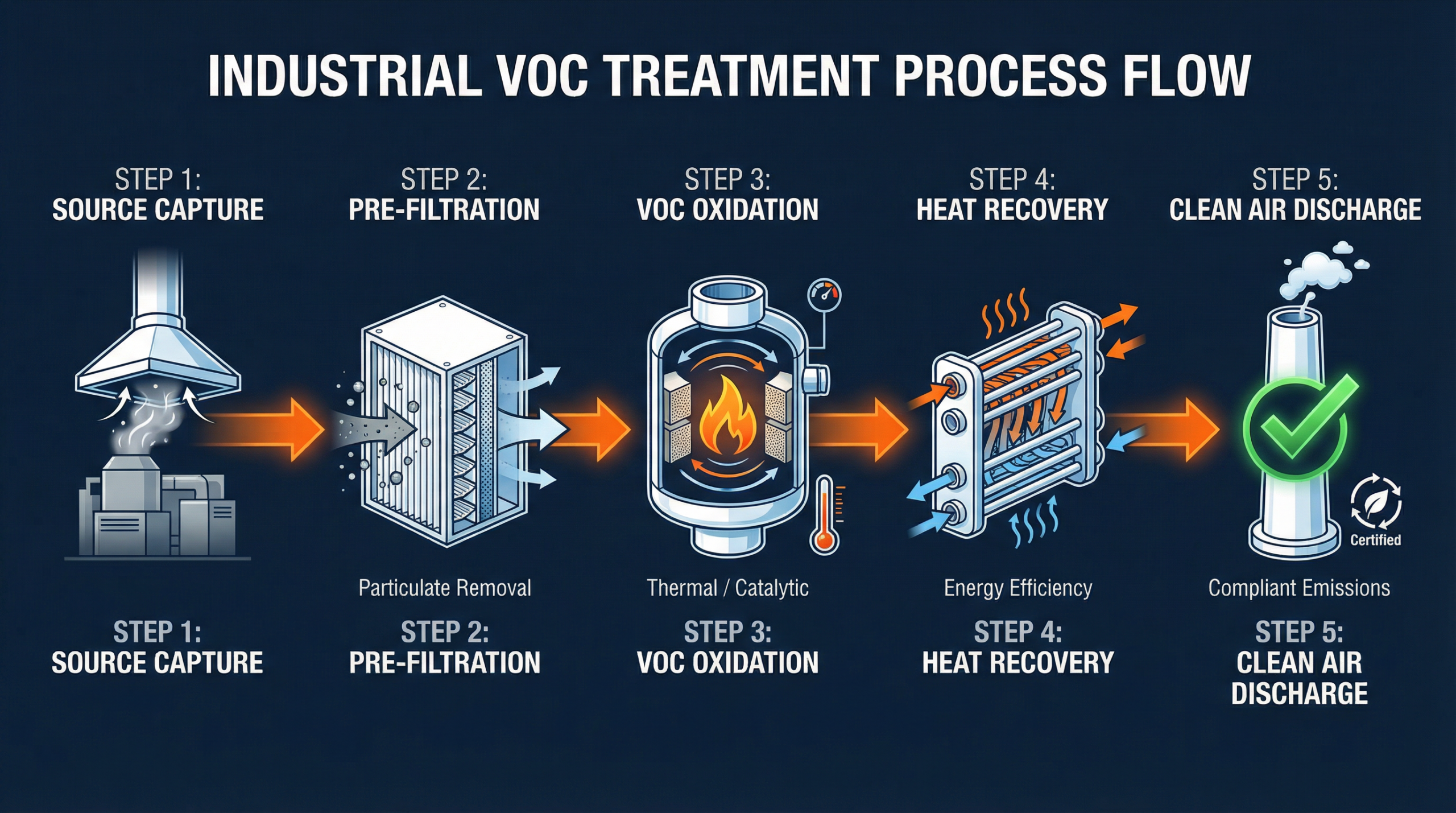
A properly engineered VOC treatment system follows a defined process sequence from exhaust capture to compliant clean air discharge.
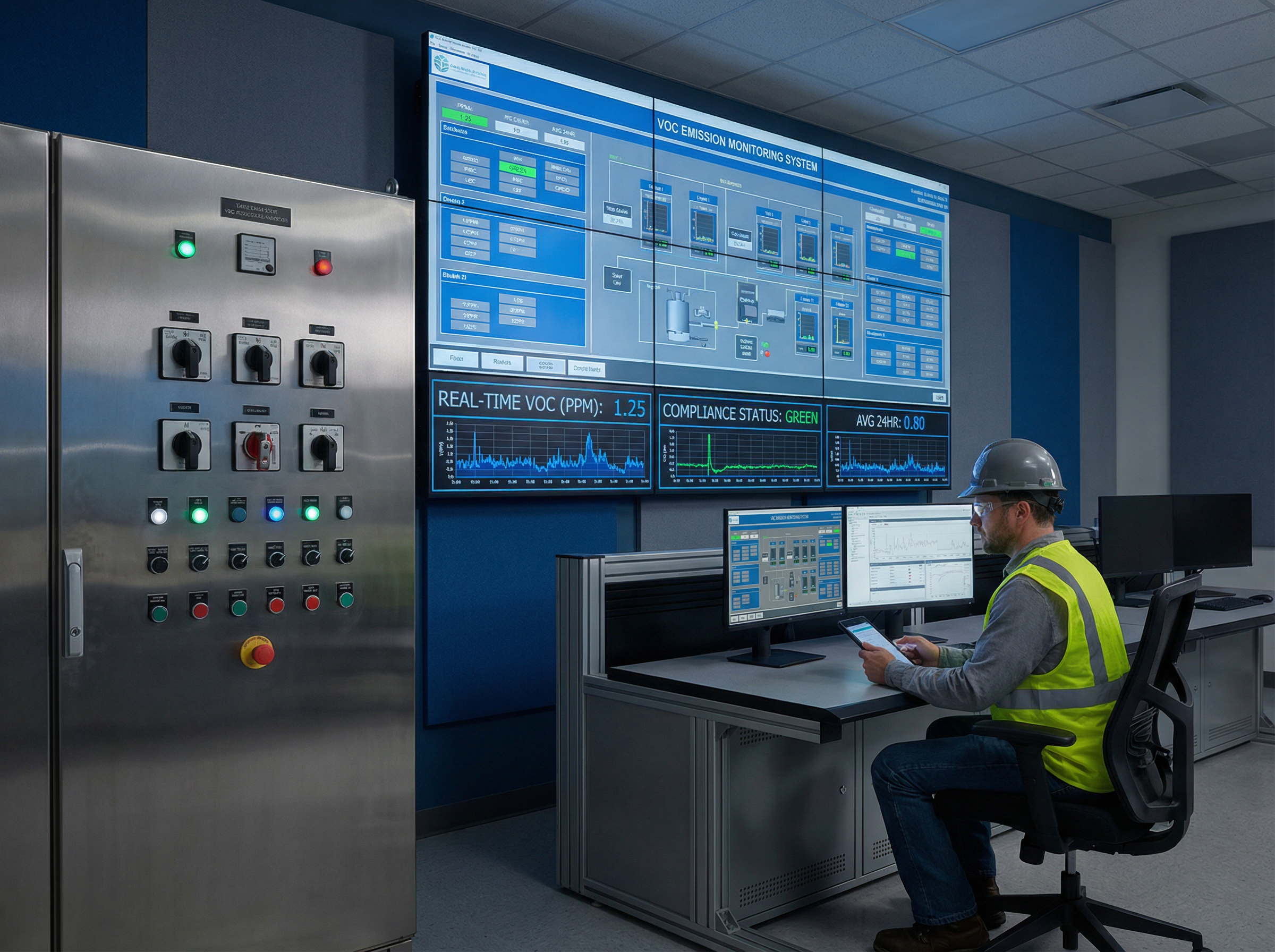
Our engineering process is grounded in rigorous system design and a thorough understanding of applicable regulatory frameworks, including EPA (40 CFR) and EU Industrial Emissions Directive (IED) standards. Each project is approached with the following engineering disciplines:
Our engineering capability is documented in our performance results and case studies.
A VOC treatment system is an engineered air pollution control unit that removes or destroys volatile organic compounds from industrial exhaust streams before they are released to the atmosphere. Systems are selected based on exhaust volume, VOC type, and applicable emission regulations.
Regenerative Thermal Oxidizers (RTO) typically achieve VOC destruction efficiencies of 95% to 99%+, depending on system design and operating conditions. Catalytic oxidizers can achieve similar efficiencies at lower operating temperatures when the VOC stream is compatible with the catalyst.
Catalytic oxidation is preferred for lower VOC concentration streams, typically below 2,000 ppm, where the reduced operating temperature (200–400°C vs. 750–900°C for thermal) results in significant fuel savings. It is not suitable for exhaust streams containing catalyst poisons such as silicone, phosphorus, or heavy metals.
Yes. Carbon adsorption systems are specifically designed for solvent recovery applications. VOCs are adsorbed onto activated carbon beds and subsequently desorbed using steam or hot gas. The recovered solvent can be purified and reused, which may offset operating costs depending on solvent value and volume.
System selection depends on several key parameters: exhaust airflow volume, VOC concentration and composition, moisture and particulate content, operating hours, available utilities, site layout, and applicable emission limits. Our engineering team conducts a technical assessment to recommend the most appropriate and cost-effective solution for your specific process conditions.
Contact our engineering team to discuss your specific VOC abatement requirements. We provide technical consultations and detailed system proposals to help you identify the most effective, compliant, and cost-efficient solution for your facility.
Our engineering team will respond within 24 hours.