Address
304 North Cardinal St.
Dorchester Center, MA 02124
Work Hours
Monday to Friday: 7AM - 7PM
Weekend: 10AM - 5PM

Address
304 North Cardinal St.
Dorchester Center, MA 02124
Work Hours
Monday to Friday: 7AM - 7PM
Weekend: 10AM - 5PM

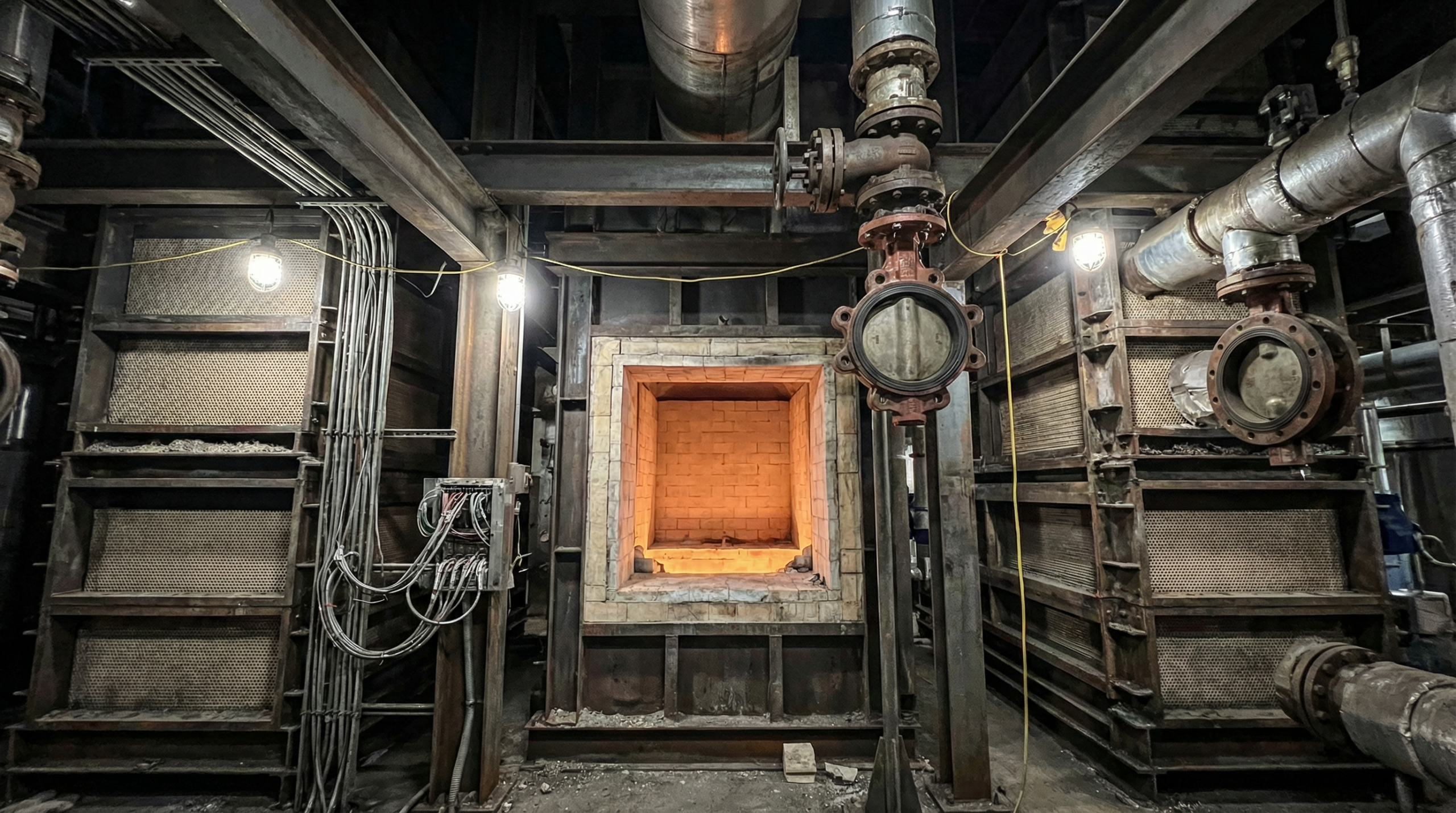
Engineered replacement components and maintenance parts for regenerative thermal oxidizer systems.
Industrial regenerative thermal oxidizer (RTO) systems operate under extreme thermal cycling conditions — combustion temperatures typically range from 760 °C to 980 °C, with continuous flow-switching cycles that place mechanical stress on valves, refractory, and heat exchange media.
Component wear is inevitable in high-cycle oxidizer operation. Without a structured spare parts strategy, facilities risk unplanned downtime, reduced VOC destruction efficiency, and potential non-compliance with emission regulations. Timely replacement of critical parts preserves system availability and maintains the performance standards required for environmental compliance.
This page outlines the key RTO accessories and replacement parts available for coating, chemical, printing, pharmaceutical, and electronics manufacturing facilities operating VOC treatment systems.
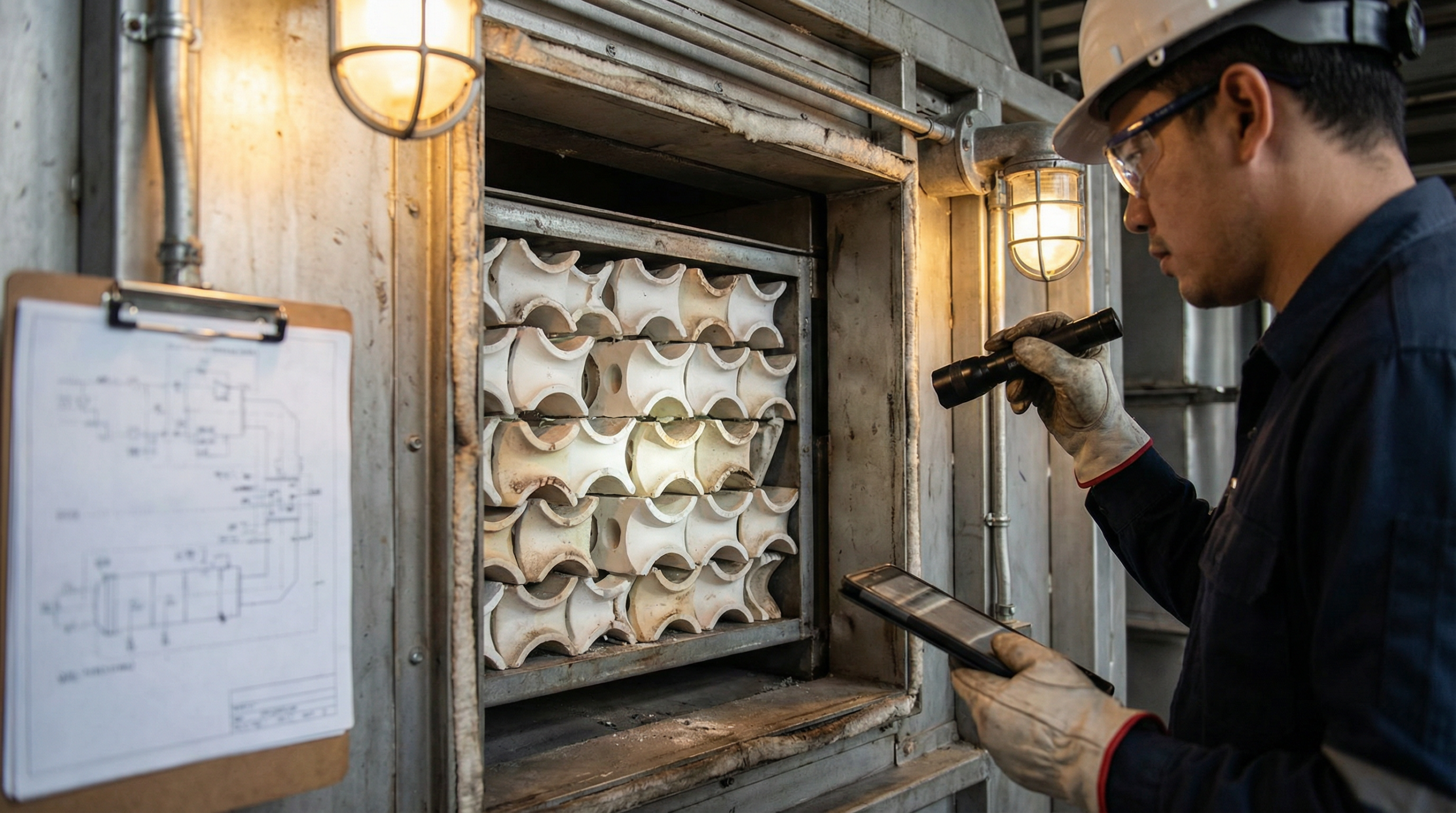
Engineered components designed for high-temperature oxidizer environments, supporting reliable VOC destruction and system longevity.
🔶
Structured ceramic saddle or honeycomb packing designed for high thermal retention and low pressure drop. Replacement media restores heat recovery efficiency and reduces supplemental fuel consumption in regenerative oxidizer beds.
⚙️
Industrial butterfly and poppet-style diverter valves engineered for continuous high-temperature flow switching between RTO heat exchange chambers. Worn or leaking valves directly reduce VOC destruction efficiency and increase bypass risk.
🔥
Fuel-fired burners sized for the RTO combustion chamber heat input requirement, along with flame sensors and ignition modules. Reliable burner operation is critical for maintaining oxidation temperature and safe system startup sequences.
🖥️
Programmable logic controllers, HMI operator panels, and safety interlock modules managing RTO sequencing, valve timing, and alarm functions. Control system upgrades can also improve operational visibility and remote monitoring capability.
📡
Thermocouples, RTDs, and differential pressure transmitters providing real-time process data to the RTO control system. Accurate sensor readings are essential for maintaining combustion temperature setpoints and detecting media fouling or valve leakage.
🧱
High-temperature castable refractory, ceramic fiber blanket, and insulation board protecting the RTO combustion chamber shell and transition zones. Refractory degradation increases heat loss and raises fuel consumption; timely repair preserves thermal efficiency.
Component quality directly affects VOC destruction efficiency, energy consumption, and regulatory compliance. Using OEM-grade or engineered-compatible parts ensures the system operates within its designed performance parameters.
✅
Worn ceramic media or leaking valves reduce the thermal oxidation temperature and increase VOC bypass, directly lowering destruction efficiency below regulatory thresholds.
✅
Fouled or degraded ceramic packing increases system pressure drop, raising fan energy consumption and reducing the effective heat recovery rate across the regenerative beds.
✅
Flame sensors, ignition modules, and UV detectors are safety-critical components. Failure of these parts can trigger unsafe conditions or repeated nuisance shutdowns that interrupt production.
| Component | Function in RTO System | Risk if Worn or Failed |
|---|---|---|
| Ceramic Heat Exchange Media | Thermal energy storage and recovery | Higher supplemental fuel cost; reduced heat recovery |
| Diverter / Butterfly Valves | Airflow switching between heat beds | Incomplete VOC oxidation; emission non-compliance |
| Temperature Sensors | Combustion zone monitoring and control | Inaccurate setpoint control; safety interlock failure |
| Refractory Lining | Combustion chamber thermal insulation | Shell overheating; structural integrity risk |
| Burner & Ignition System | Supplemental heat input and safe ignition | Unstable combustion; repeated shutdown events |
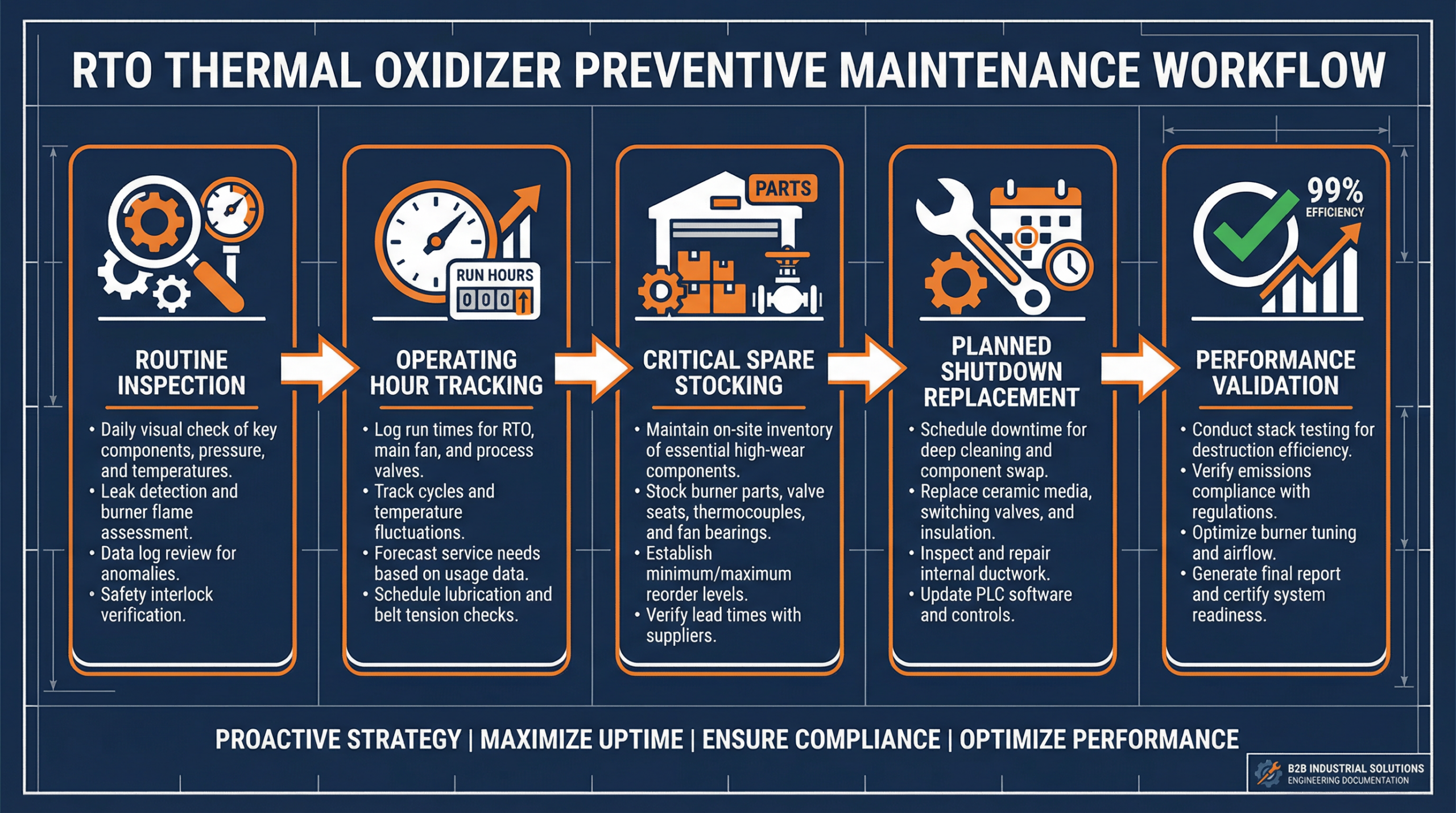
A structured spare parts management program reduces unplanned downtime and ensures continuous compliance with VOC emission limits. The following five-step approach is recommended for facilities operating RTO systems in continuous or high-utilization service.
Conduct regular visual and instrument checks on valves, sensors, refractory, and ceramic beds. Document findings to establish a baseline condition record.
Log cumulative run hours for key components. Set replacement thresholds based on manufacturer guidance and actual operating conditions, particularly for high-cycle valve actuators.
Maintain on-site inventory of high-wear items with long lead times: ceramic media, valve seats, thermocouples, and ignition components. Define minimum reorder levels based on operating cycles.
Align major component replacements with scheduled production shutdowns to minimize operational impact. Coordinate ceramic media replacement and refractory repair during planned outages.
After replacement, commission parts with emission monitoring to confirm VOC destruction efficiency meets design targets. Document results for regulatory compliance records.
Common questions from plant engineers and maintenance managers regarding RTO component selection and spare parts strategy.
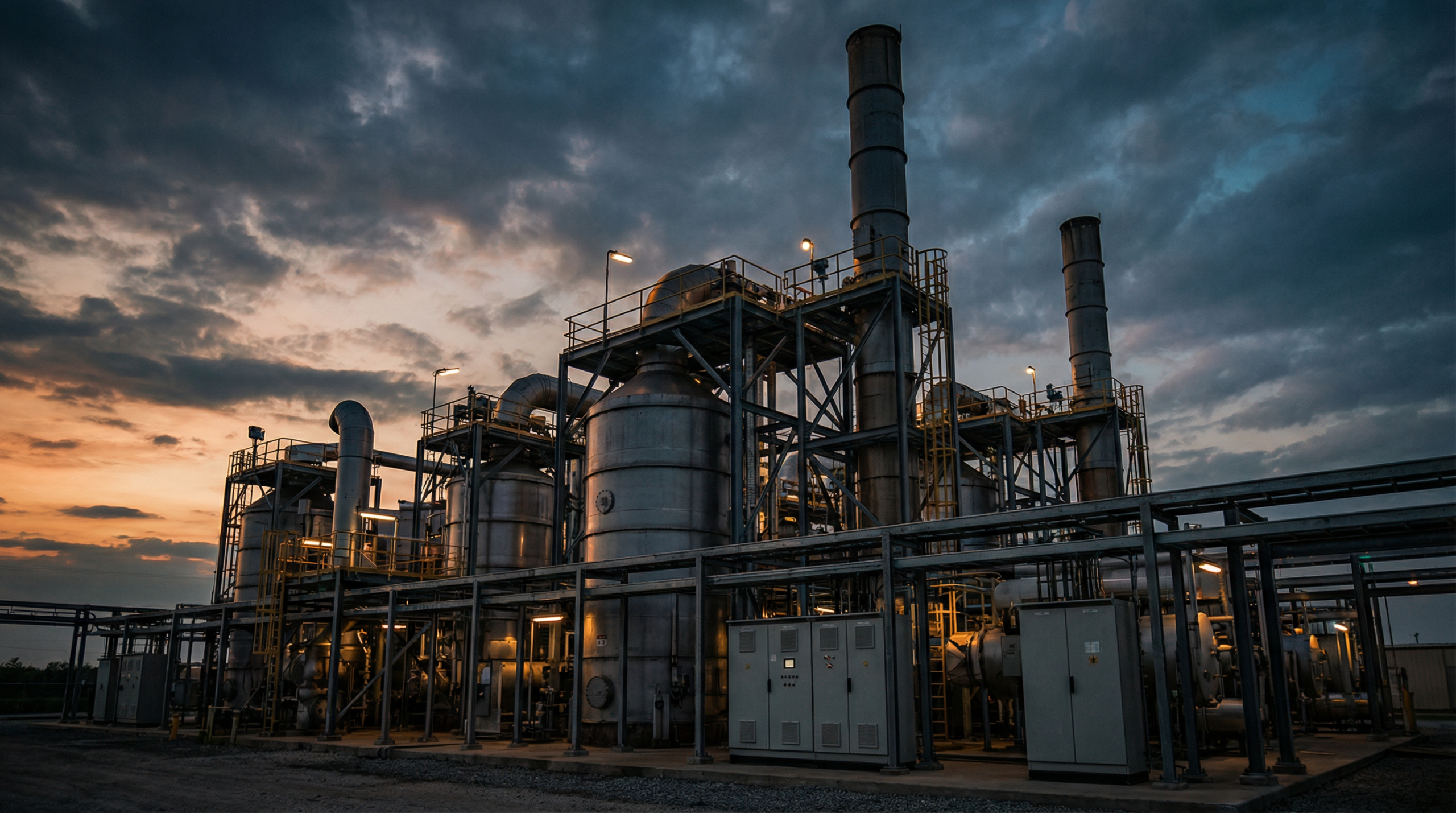
Contact our engineering team to discuss replacement parts, maintenance planning, or system performance assessment for your regenerative thermal oxidizer installation.
All replacement components are supplied to OEM specifications or engineered-compatible equivalents. Parts undergo high-temperature material verification and are traceable to applicable industrial standards. Our engineering team provides technical support for part identification, installation guidance, and post-replacement performance validation.
Our engineering team will respond within 24 hours.