Address
304 North Cardinal St.
Dorchester Center, MA 02124
Work Hours
Monday to Friday: 7AM - 7PM
Weekend: 10AM - 5PM

Address
304 North Cardinal St.
Dorchester Center, MA 02124
Work Hours
Monday to Friday: 7AM - 7PM
Weekend: 10AM - 5PM

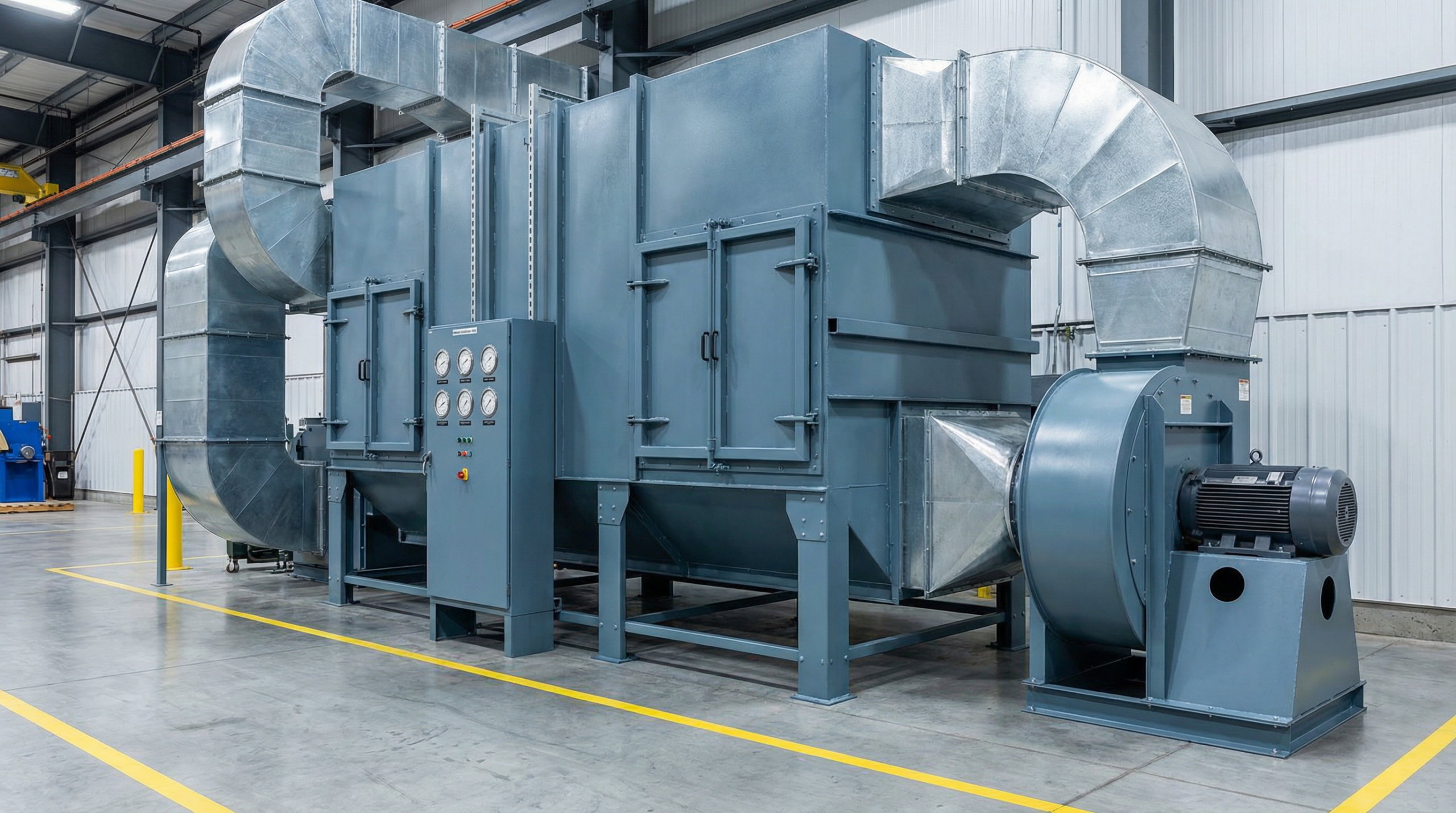
Engineered air filtration systems for industrial exhaust pre-treatment and emission compliance.
Home › VOC Treatment › Air Filtration Units
Industrial processes in manufacturing, coating, chemical production, and printing generate airborne contaminants including particulate matter and volatile organic compounds (VOCs). Effective air filtration is essential for worker safety, regulatory compliance, and process stability.
Industrial Air Filtration Units provide engineered solutions to capture fine particulates and pre-treat exhaust streams before VOC abatement, protecting downstream oxidation systems and ensuring cleaner emissions.
When integrated with Regenerative Thermal Oxidizer (RTO) systems or Catalytic Oxidizers, properly designed air filtration significantly extends equipment service life and maintains consistent VOC destruction efficiency across varying process conditions.
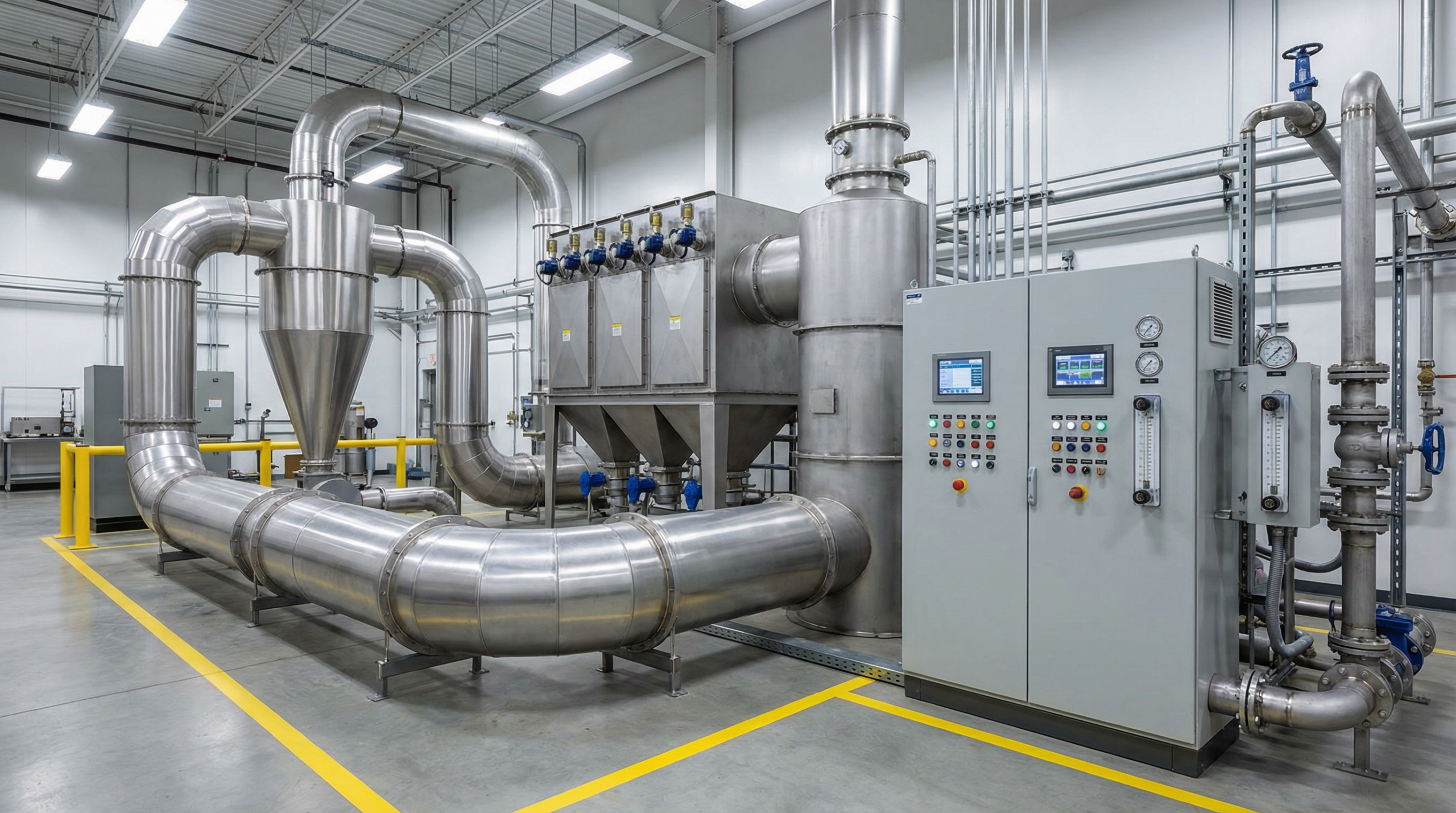
Industrial Air Filtration Units are engineered systems that remove dust, aerosols, paint overspray, and other solid and liquid particulates from process exhaust air. These units typically use high-efficiency filters, cyclonic separation, and pre-filter stages to reduce particulate loading on VOC treatment systems such as RTOs, RCOs, or Carbon Adsorption.
Key Technical Functions:
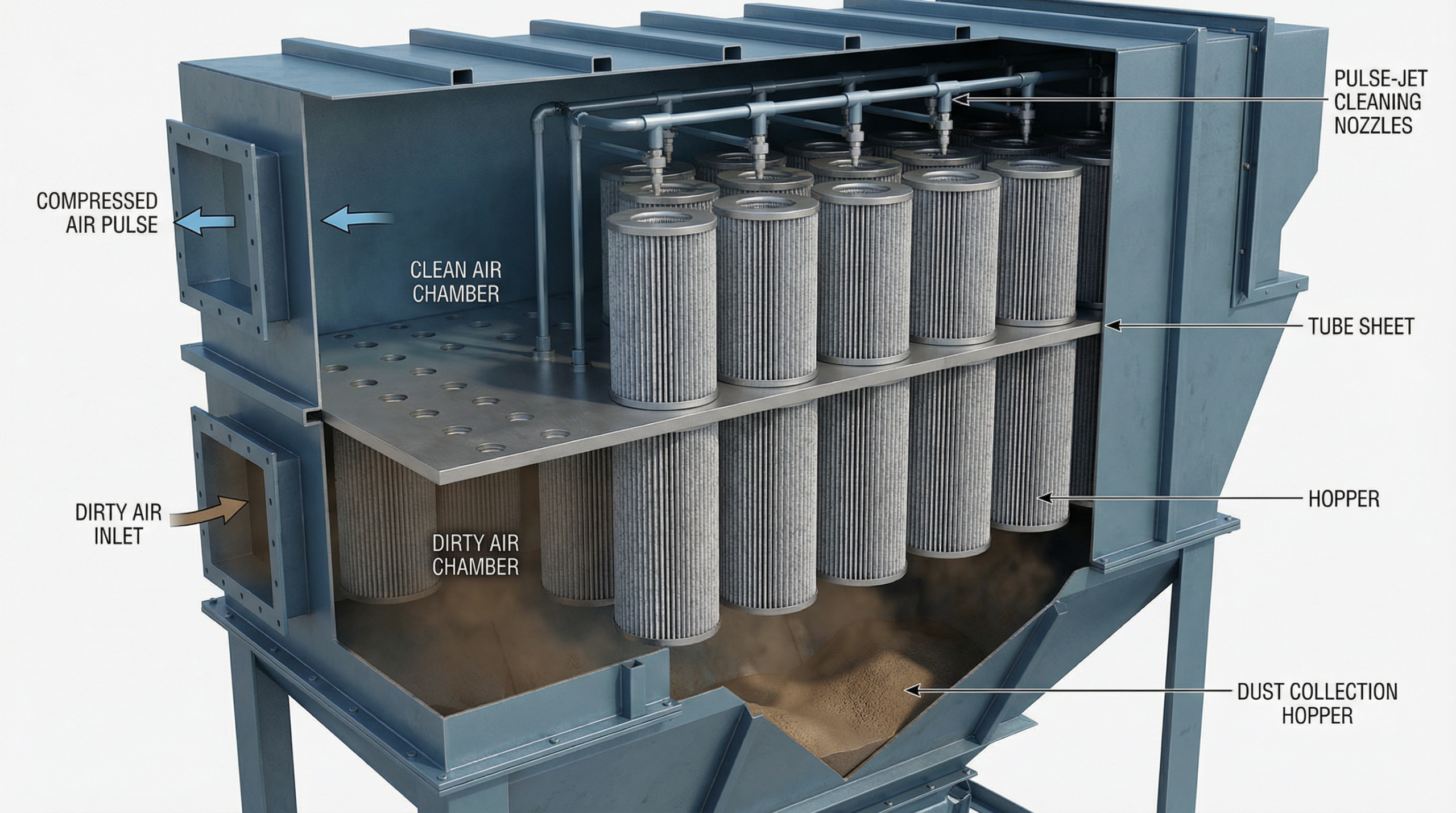
Each component is engineered for reliable operation in demanding industrial exhaust environments.
🔵
Initial stage for coarse particulate separation using baffle or cyclonic mechanisms, reducing load on fine filter media.
🔷
High-efficiency pleated cartridge or woven bag media captures fine particulates down to sub-micron levels with low pressure drop.
⚙️
Industrial centrifugal fan maintains consistent airflow through the filtration system, sized to match process exhaust volumes.
📊
Monitor filter loading condition across each stage, providing real-time data to guide maintenance scheduling and prevent system overload.
🚪
Engineered for safe and efficient filter replacement and inspection, minimizing downtime during scheduled maintenance.
🖥️
Provides operation monitoring, alarm management, and safety interlocks, with optional PLC integration for plant automation systems.
Designed for continuous industrial operation with minimal maintenance burden and maximum system protection.
Air filtration units are deployed across a wide range of manufacturing and process industries requiring particulate control.
🚗
Capturing paint overspray, fine particulates, and aerosols from spray booths and coating lines before VOC treatment.
🧪
Pre-filtering chemical aerosols and reactive particulates ahead of VOC oxidation systems to protect equipment integrity.
🖨️
Removing ink mist, paper dust, and solvent aerosols from press exhaust streams in flexographic and offset printing operations.
💻
Controlling solder flux fumes, resin particulates, and cleaning solvent aerosols in PCB and semiconductor manufacturing.
🏭
General industrial exhaust pre-treatment for metal fabrication, welding, grinding, and surface treatment operations.
💊
Controlling dry particulates, API dust, and solvent aerosols to protect clean processes and meet GMP environmental requirements.
Air filtration is the critical first stage in a complete industrial VOC emission control system.
01
Airborne contaminants are collected at source via engineered ductwork and capture hoods.
02
Large particulate matter is removed using cyclonic or baffle separators, protecting fine filter media.
03
High-efficiency filter media captures fine particles and aerosols to the required emission specification.
04
Filtered air is conditioned for uniform flow distribution before entering the VOC abatement stage.
05
Cleaned air enters the RTO or RCO for thermal VOC destruction and clean gas discharge.
Explore the downstream VOC destruction systems that integrate with air filtration units:
Typical operating parameters for industrial air filtration units. Exact specifications are determined by process conditions and application requirements.
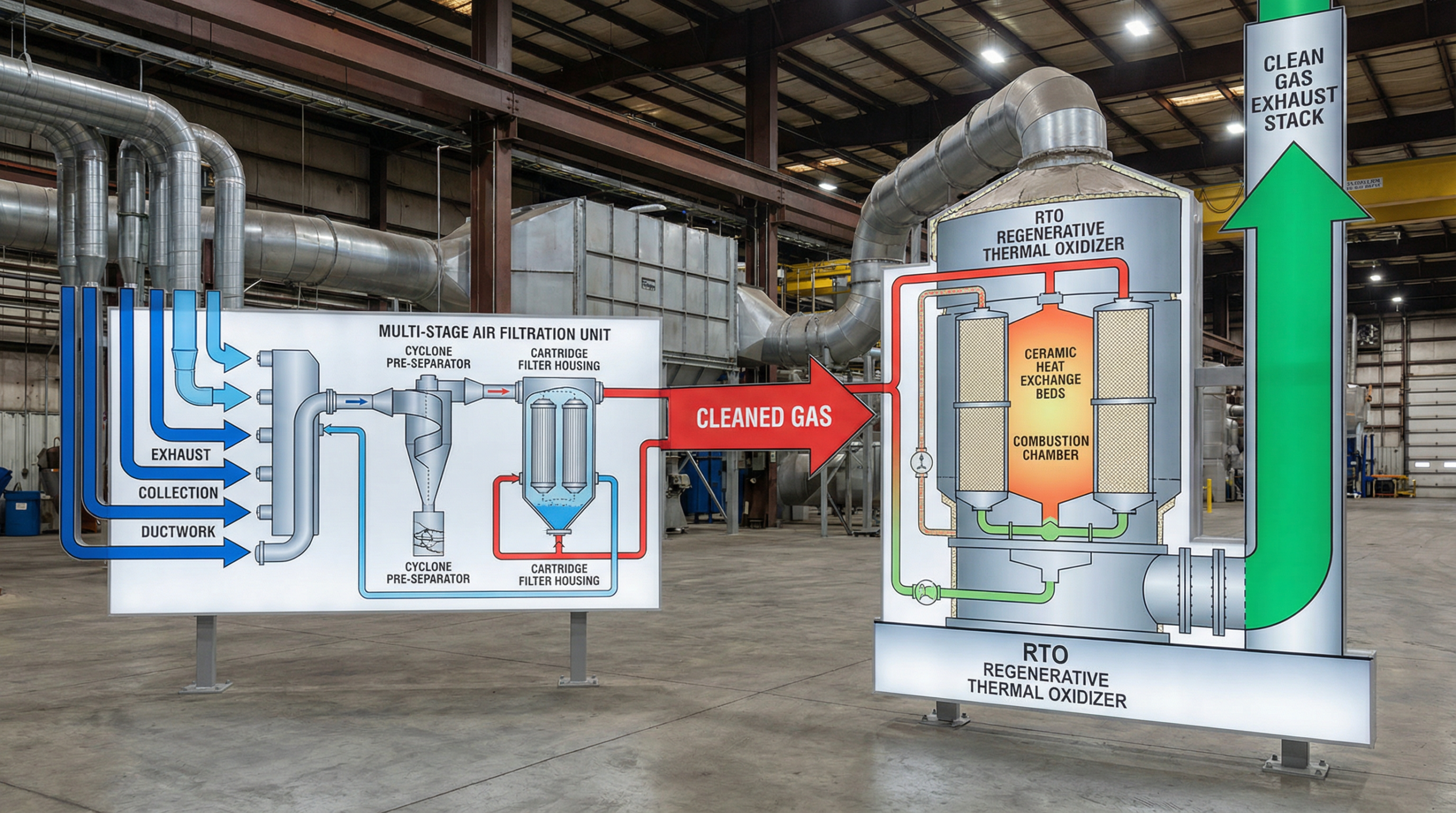
Integrating air filtration units into industrial exhaust systems requires careful engineering to ensure compatibility with process conditions and downstream VOC treatment equipment.
Understanding the complementary roles of filtration and oxidation in a complete VOC emission control system.
In most industrial applications, air filtration and RTO systems are deployed together as an integrated solution.
Technical answers to common questions about industrial air filtration units and VOC treatment integration.
Industrial air filtration units are designed to remove solid and liquid particulates including dust, paint overspray, welding fumes, ink mist, grinding particles, chemical aerosols, and pharmaceutical powders. They are not designed to remove gaseous VOC compounds, which require downstream thermal or catalytic oxidation systems such as RTOs or RCOs.
Particulates entering an RTO can accumulate on ceramic heat exchange media, causing blockages that reduce thermal efficiency and increase pressure drop. Air filtration units remove these particulates upstream, maintaining clean airflow into the RTO and protecting the ceramic bed from fouling. This extends maintenance intervals and preserves VOC destruction performance over the system’s operational life.
Common filter media types include pleated polyester cartridge filters for general dust collection, woven or needle-felt baghouse media for high dust loads, and HEPA-grade media for fine particulate control. Media selection is based on particle size distribution, operating temperature, chemical compatibility, and required filtration efficiency. For applications with sticky or hygroscopic dusts, surface-treated or PTFE-membrane media may be specified.
Filter replacement frequency depends on particulate loading, operating hours, and differential pressure readings across the filter stage. Maintenance plans are developed per application, typically ranging from quarterly inspections to annual replacements under normal industrial conditions. Differential pressure monitoring provides real-time guidance for maintenance scheduling, preventing both premature replacement and filter overloading.
Yes. For high dust load applications exceeding approximately 5 g/Nm³, a cyclonic pre-separator is typically installed upstream of the main filter stage to remove coarse particles before they reach the filter media. This significantly extends filter life and reduces maintenance frequency. System design accounts for peak dust concentration conditions to ensure reliable continuous operation.
Industrial air filtration is a foundational component of compliant VOC treatment systems. If you are planning equipment upgrades or evaluating emission control strategies, our engineering team can assist with system selection and design.
Provide your airflow rate, dust characteristics, and process conditions — our team will recommend a suitable system configuration.
Air filtration units are deployed as part of a complete industrial VOC emission control system. Explore related technologies:
🔥
Regenerative Thermal Oxidizers for high-efficiency VOC destruction with heat recovery.
⚗️
Lower-temperature catalytic oxidation for energy-efficient VOC treatment in suitable applications.
💧
Wet scrubbing systems for water-soluble VOC and acid gas removal in industrial processes.
🌐
Complete overview of industrial VOC abatement technologies and system selection guidance.
Our engineering team will respond within 24 hours.