Address
304 North Cardinal St.
Dorchester Center, MA 02124
Work Hours
Monday to Friday: 7AM - 7PM
Weekend: 10AM - 5PM

Address
304 North Cardinal St.
Dorchester Center, MA 02124
Work Hours
Monday to Friday: 7AM - 7PM
Weekend: 10AM - 5PM

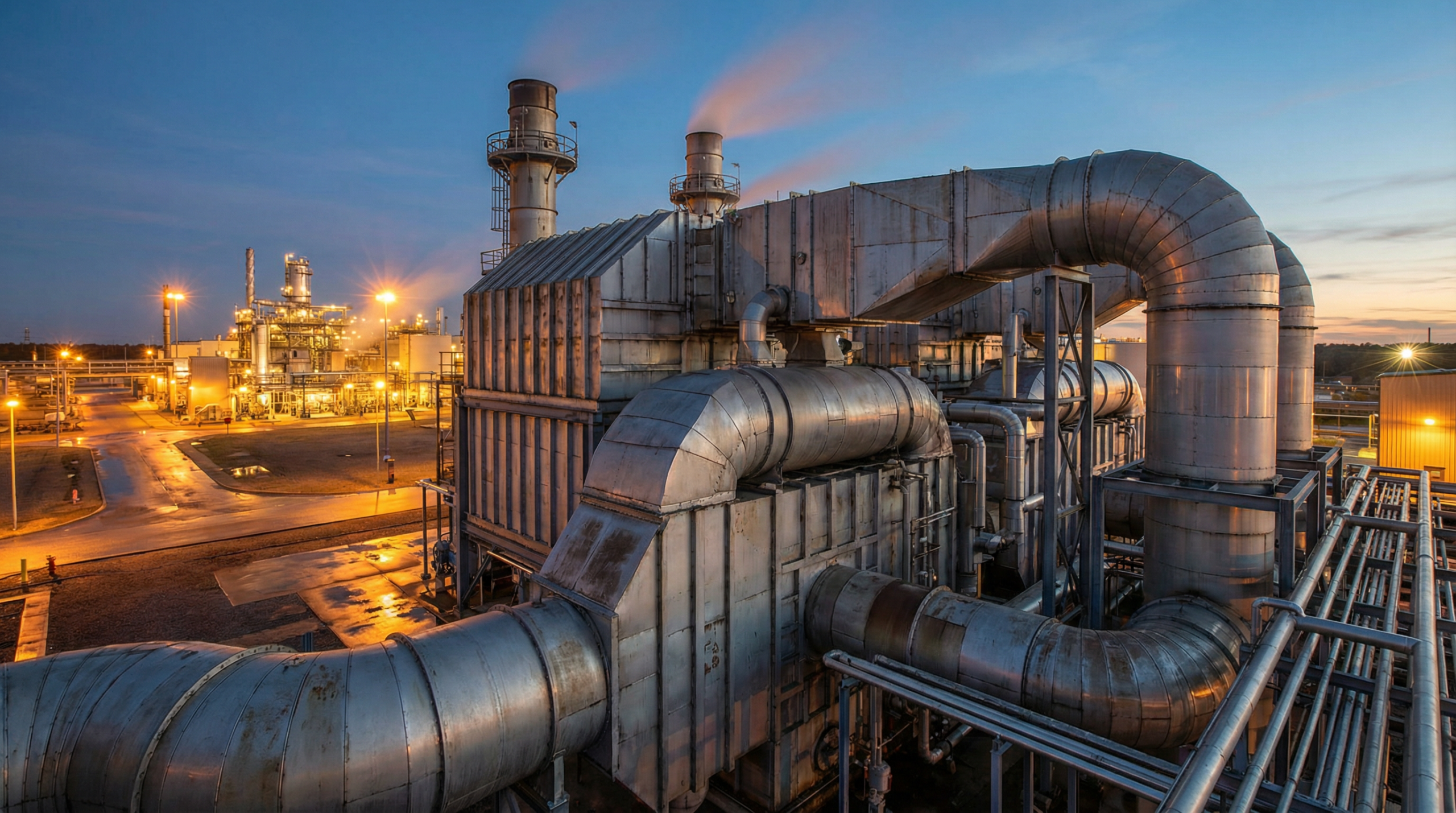
Industrial facilities face increasing regulatory pressure to control Volatile Organic Compound (VOC) emissions while maintaining stable production performance. This resource center provides engineering-grade technical materials — covering Regenerative Thermal Oxidizer (RTO) systems, VOC treatment technologies, industrial exhaust gas control, and regulatory compliance documentation. The content is structured to support environmental engineers, plant managers, EPC contractors, and procurement teams in making informed technical decisions.
Access structured technical content across three resource areas — engineering articles, Q&A references, and downloadable system documentation.
📄
In-depth engineering articles covering RTO working principles, VOC treatment technologies, system comparison analysis (RTO vs. RCO vs. Scrubber), heat recovery mechanisms, and emission compliance strategies for European and North American markets.
❓
Structured answers to common engineering and procurement questions — including RTO destruction efficiency, catalyst lifespan in RCO systems, pressure drop calculation, maintenance planning, explosion-proof design, and system footprint considerations.
📥
Downloadable technical documents including RTO system brochures, catalytic oxidizer specifications, process flow diagrams (PFD), general arrangement (GA) drawings, emission performance reports, and installation guidelines for engineering review.
This resource center covers technical content for the following industrial VOC abatement systems. Each technology is supported by engineering articles, performance data, and system documentation.
High thermal efficiency VOC destruction with ceramic heat recovery up to 95%. Suitable for continuous high-volume exhaust streams.
Lower oxidation temperature via catalyst bed, reducing fuel consumption. Suitable for medium VOC concentration applications with stable composition.
Wet scrubbing technology for water-soluble VOC gases and acidic exhaust streams. Commonly used as pre-treatment stage in integrated systems.
Activated carbon adsorption for VOC recovery and polishing treatment. Effective for low-concentration exhaust streams and solvent recovery applications.
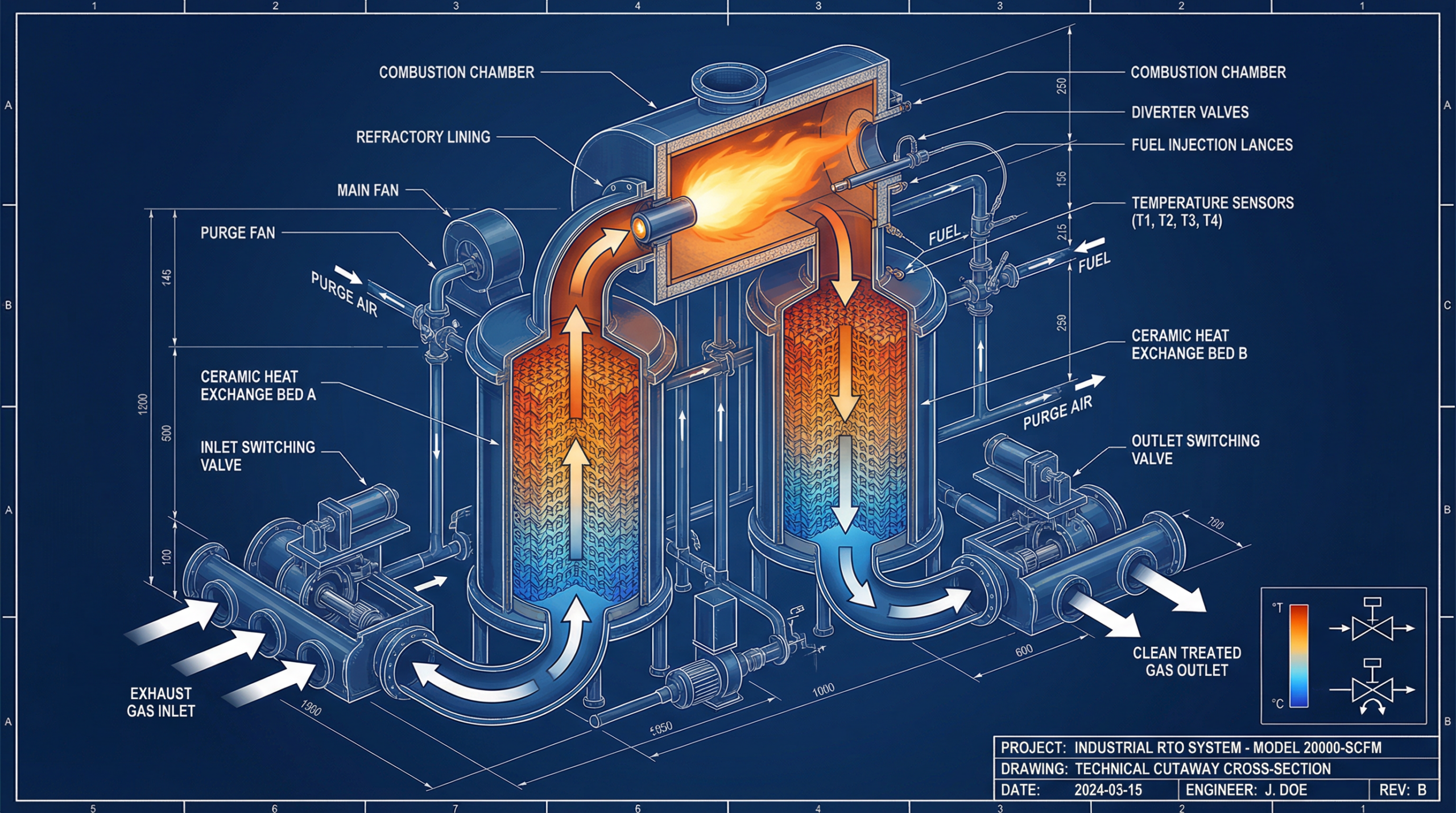
Technical articles, engineering guides, and system documentation in this resource center apply to the following industrial sectors with VOC emission control requirements.
🚗
Coating lines, paint booths, and surface treatment processes generating solvent-based VOC emissions.
⚗️
Reactor exhaust, solvent evaporation, and process off-gas streams requiring high-efficiency oxidation treatment.
🎨
Industrial coating operations with continuous solvent-laden exhaust requiring stable RTO or RCO treatment.
🖨️
Flexographic and gravure printing operations with ink-solvent exhaust requiring VOC abatement systems.
💻
PCB cleaning, semiconductor fabrication, and assembly processes with complex mixed-VOC exhaust profiles.
💊
Solvent recovery and exhaust treatment in API manufacturing and tablet coating processes under GMP compliance.
The technical materials in this resource center are structured to assist project teams at all stages — from initial feasibility assessment through EPC bidding and internal technical approval.
Industrial VOC treatment system design requires precise input data and a structured evaluation methodology. The engineering resources provided here support project teams in defining system requirements, selecting appropriate treatment technologies, and preparing documentation for regulatory submission.
These materials are applicable to feasibility studies, EPC bidding documentation, OEM integration specifications, and internal technical approval processes. Content is aligned with EU Industrial Emissions Directive (IED) and US EPA VOC control requirements.
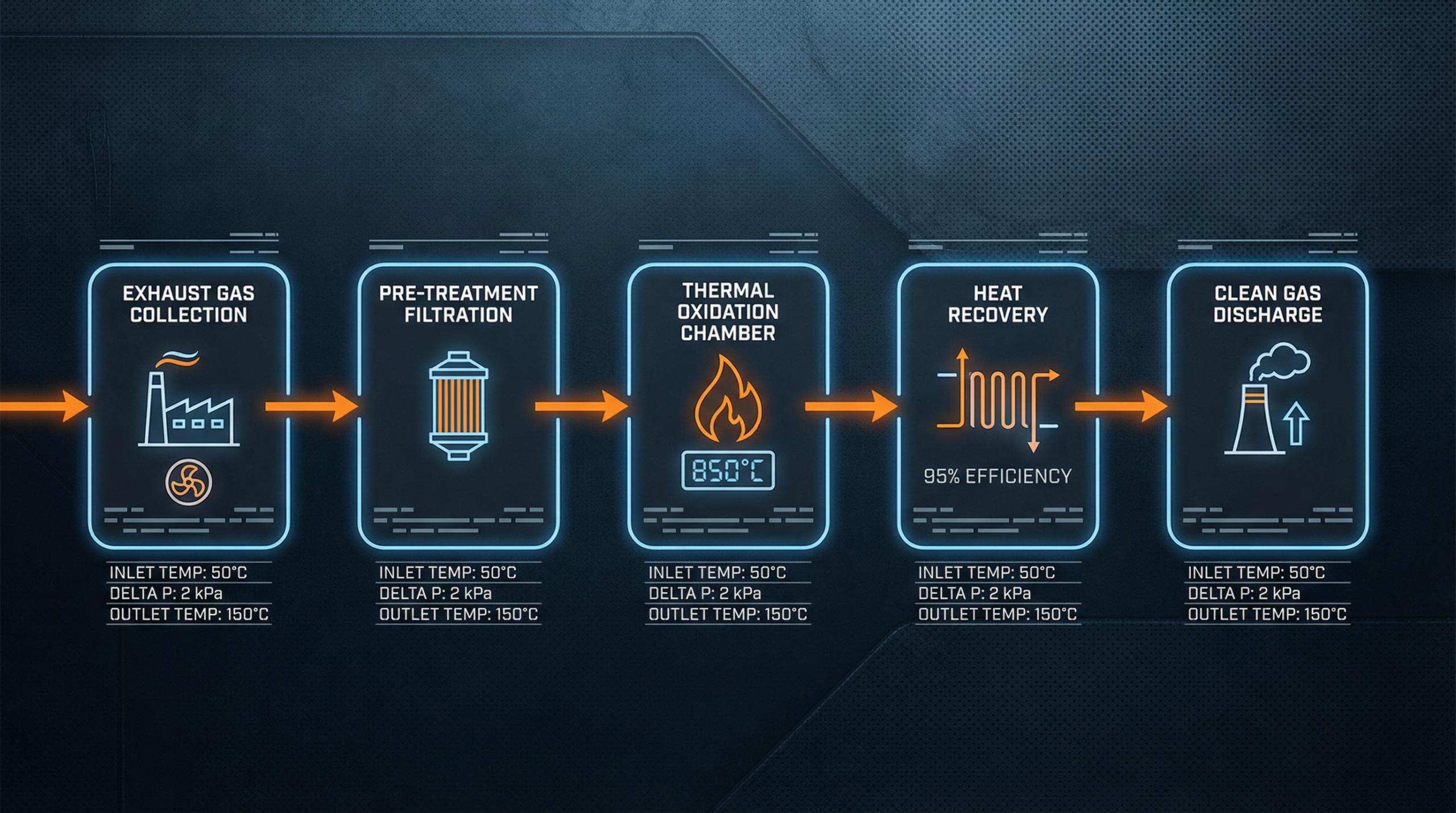
These parameters form the basis for technology selection, system sizing, and performance guarantee documentation in industrial VOC abatement projects.
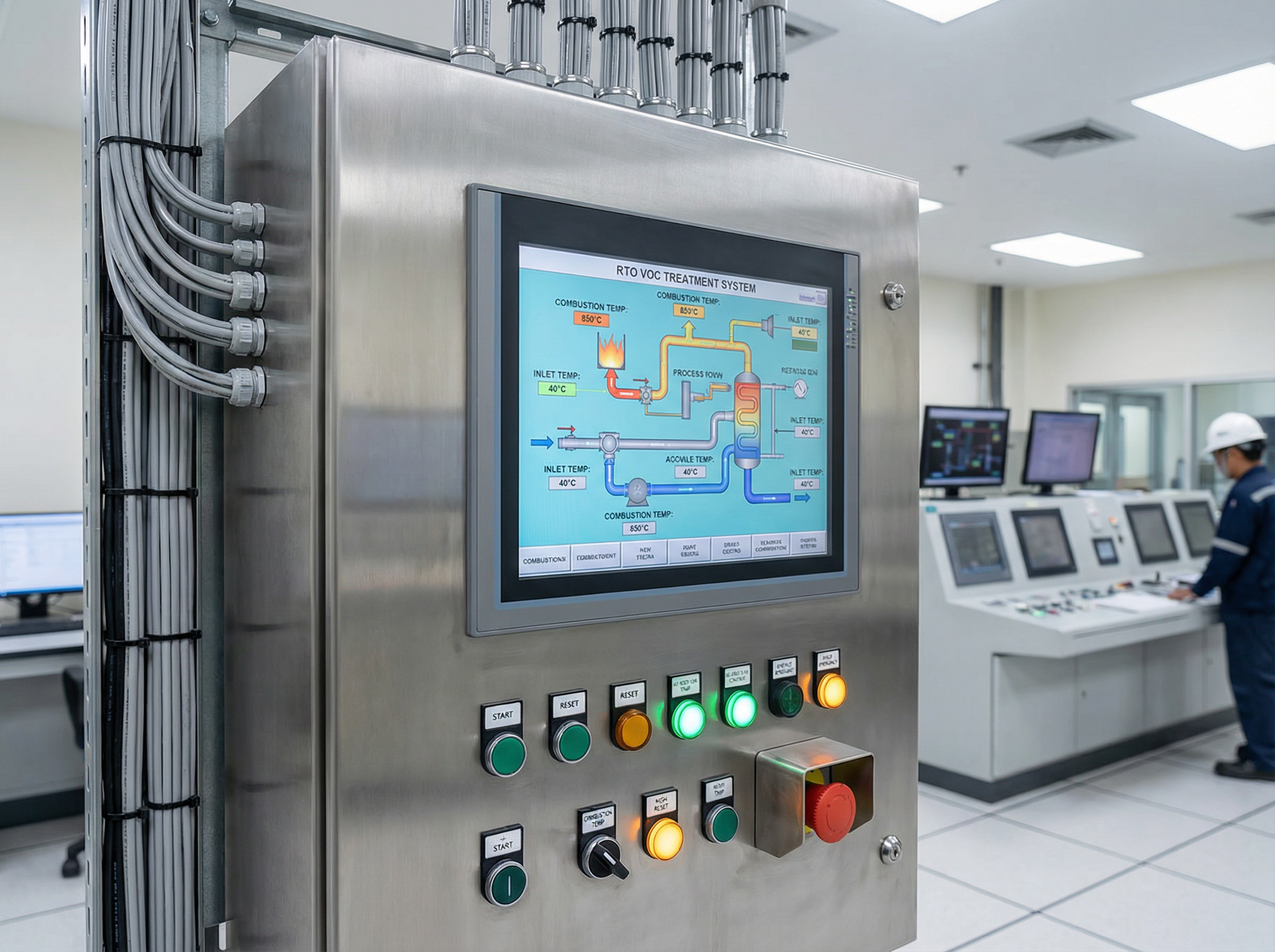
Navigate to the primary product and application sections for detailed system specifications, engineering data, and project references.
Common questions about the RTO & VOC Resources center, technical content scope, and engineering support availability.
This resource center includes RTO system design principles, VOC oxidation theory, system performance data, regulatory compliance guidelines (EU IED and US EPA), and downloadable technical specifications. Content covers Regenerative Thermal Oxidizers, Catalytic Oxidizers (RCO), VOC Scrubber Systems, and Carbon Adsorption Systems.
Yes. All technical articles and engineering guides are written specifically for environmental engineers, process engineers, plant managers, and EPC contractors involved in VOC treatment system evaluation, design, and procurement. The content addresses engineering-level parameters including airflow design, VOC concentration analysis, LEL safety, and compliance documentation.
Technical brochures, system specifications, process flow diagrams (PFD), and general arrangement drawings are available in the Downloads section. Documents are available for RTO systems, Catalytic Oxidizers, and integrated VOC treatment solutions.
Yes. Technical articles and compliance guides include information related to the EU Industrial Emissions Directive (IED), European Best Available Techniques (BAT) reference documents, and US EPA VOC control requirements under the Clean Air Act. Emission limit values and destruction efficiency standards are referenced in relevant engineering articles.
You can contact our engineering team directly through the Contact page to submit your VOC parameters — including exhaust volume, VOC concentration, gas composition, and compliance requirements. Our engineers will provide a customized system evaluation and technology recommendation for your specific application.
If you are evaluating an RTO system, catalytic oxidizer, or integrated VOC treatment solution, our engineering team can support your feasibility study, technology selection, and system specification process.
Submit your VOC parameters — exhaust volume (Nm³/h), VOC concentration (mg/Nm³), gas composition, and compliance requirements — for a customized system evaluation.
Related: RTO Systems | VOC Treatment | VOC Control Applications | RTO Projects
Our engineering team will respond within 24 hours.