Address
304 North Cardinal St.
Dorchester Center, MA 02124
Work Hours
Monday to Friday: 7AM - 7PM
Weekend: 10AM - 5PM

Address
304 North Cardinal St.
Dorchester Center, MA 02124
Work Hours
Monday to Friday: 7AM - 7PM
Weekend: 10AM - 5PM

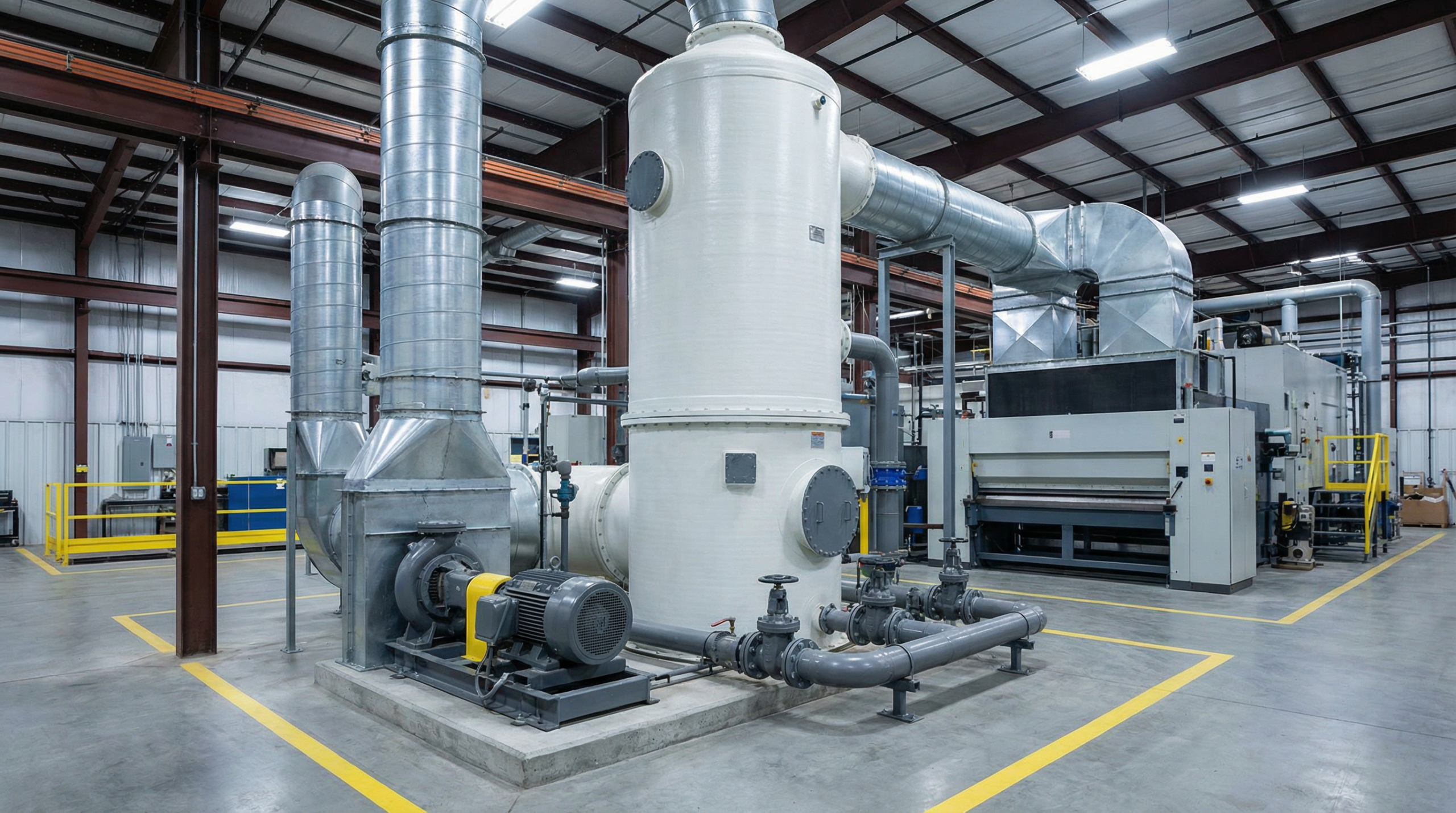
VOC Treatment Systems / VOC Scrubbers
Engineered wet scrubbing systems for industrial exhaust gas treatment in coating, chemical, printing, and manufacturing facilities. Designed for reliable gas-phase VOC removal and environmental compliance.
Home › VOC Treatment › VOC Scrubbers
Industrial processes in coatings, printing, chemical synthesis, and surface treatment often generate volatile organic compound (VOC) emissions that must be controlled to meet environmental compliance. VOC scrubbers provide a gas-phase treatment solution that leverages mass transfer and chemical absorption to remove VOC contaminants from exhaust streams. This page explains how VOC scrubber systems work, key components, system benefits, typical industrial applications, and engineering considerations for integration.
A VOC scrubber system is an air pollution control technology that removes volatile organic compounds from industrial exhaust by contacting the contaminated gas with a scrubbing liquid. VOC molecules transfer from the gas phase into the liquid through diffusion and absorption. The clean gas exits the system with significantly reduced VOC concentration.
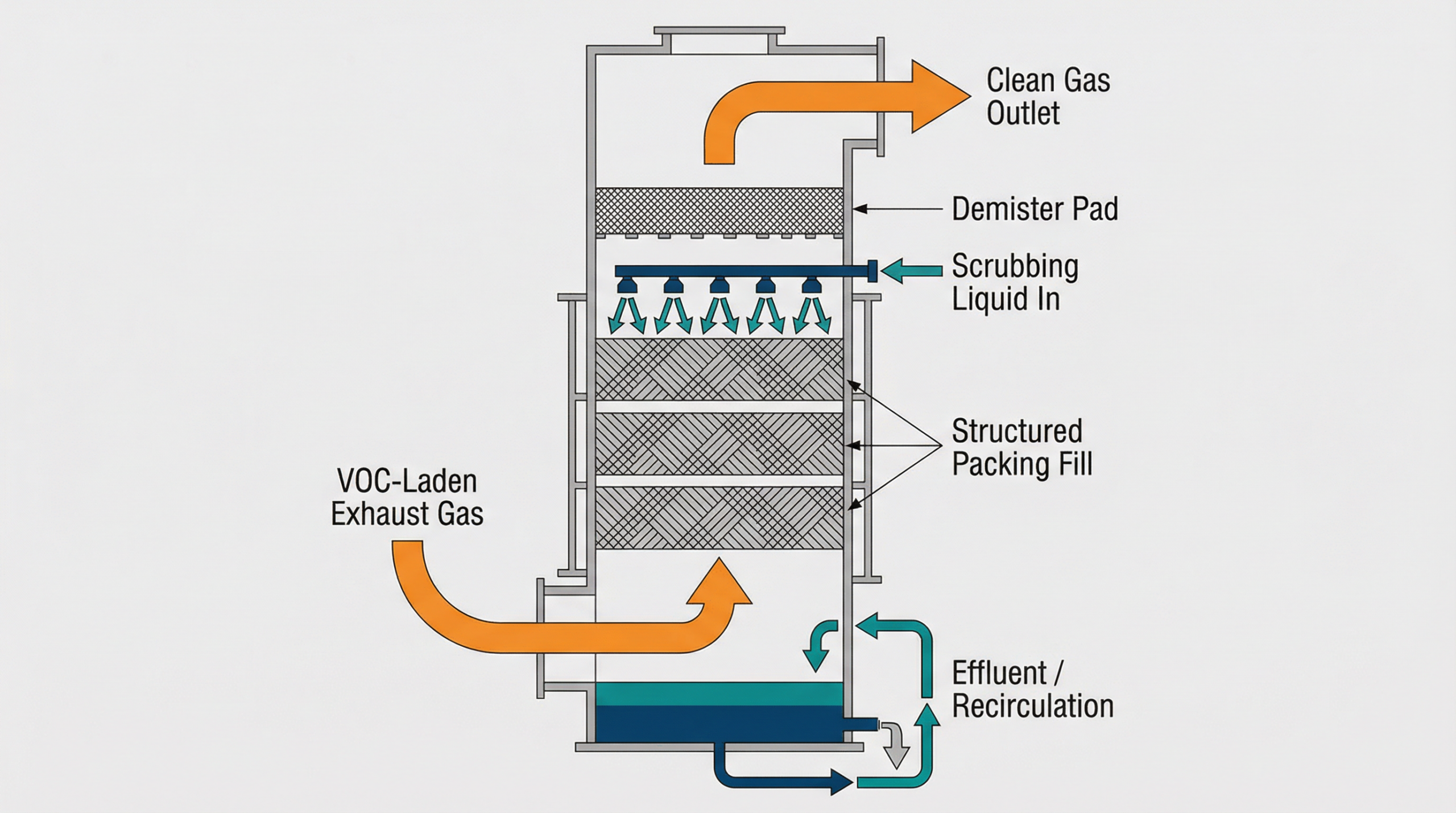
Each subsystem is engineered for reliable gas–liquid contact, process control, and long-term operational stability.
⬡
Evenly disperses incoming exhaust across the packing or spray zone to ensure uniform gas–liquid contact.
⬡
High-surface-area packing or liquid sprays maximize gas–liquid interaction for effective VOC mass transfer.
⬡
Circulates scrubbing solution continuously and maintains the required liquid-to-gas flow ratio for consistent performance.
⬡
Removes entrained liquid droplets from the cleaned gas stream before discharge to atmosphere or downstream treatment.
⬡
Automated control of flow rates, pH, temperature, and liquid level ensures stable operation and process safety.
⬡
Manages spent scrubbing solution for regeneration, treatment, or compliant disposal per local regulations.
Wet scrubbing technology offers distinct engineering benefits for specific VOC treatment scenarios in industrial environments.
Effective for soluble or reactive VOCs when proper scrubbing chemistry is selected and system is correctly sized.
Suitable for variable exhaust flow rates and changing VOC concentrations with appropriate design margins and control strategies.
Tailored liquid chemistry enables targeted absorption or neutralization of specific VOC compounds in the exhaust stream.
No requirement for high-temperature oxidation; useful where thermal energy input is constrained or process heat is unavailable.
Materials selected for chemical compatibility — including FRP and stainless steel — extend service life in aggressive chemical environments.
Modular system configurations allow phased installation and capacity expansion to match production growth requirements.
VOC wet scrubbers are deployed across a range of industrial sectors where soluble or reactive VOC emissions require gas-phase treatment.
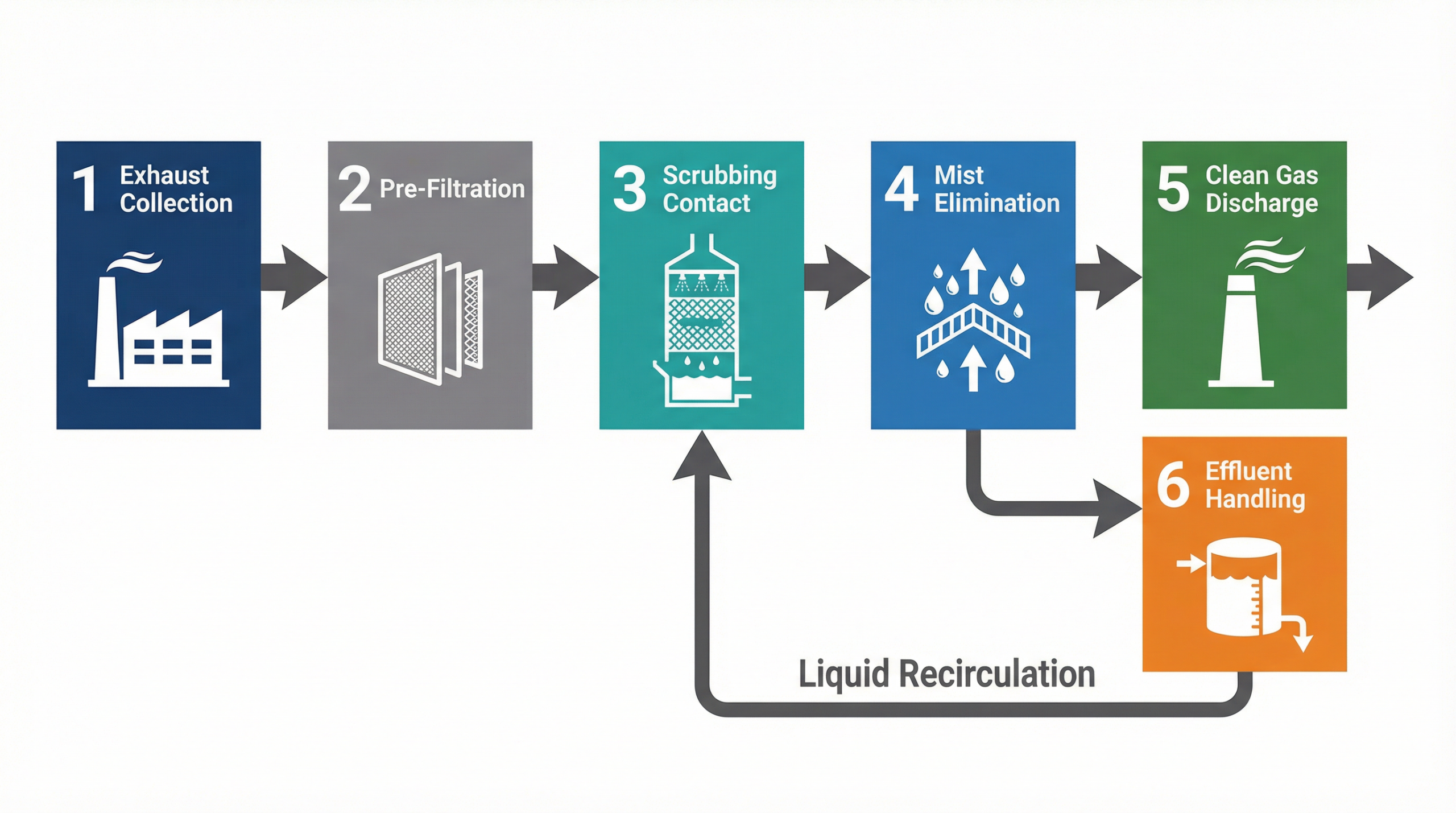
The complete VOC scrubbing workflow from exhaust collection through effluent management.
Step 01
Contaminated airstream is ducted from process source to the scrubber inlet.
Step 02
Particulate removal protects downstream packing and spray nozzles from fouling.
Step 03
Exhaust contacts scrubbing liquid in packing/spray zone for VOC absorption and mass transfer.
Step 04
Demisters remove entrained liquid droplets from the gas stream before discharge.
Step 05
Treated air is vented to atmosphere or routed to secondary thermal oxidation treatment.
Step 06
Spent scrubber solution is regenerated, treated, or disposed according to applicable environmental regulations.
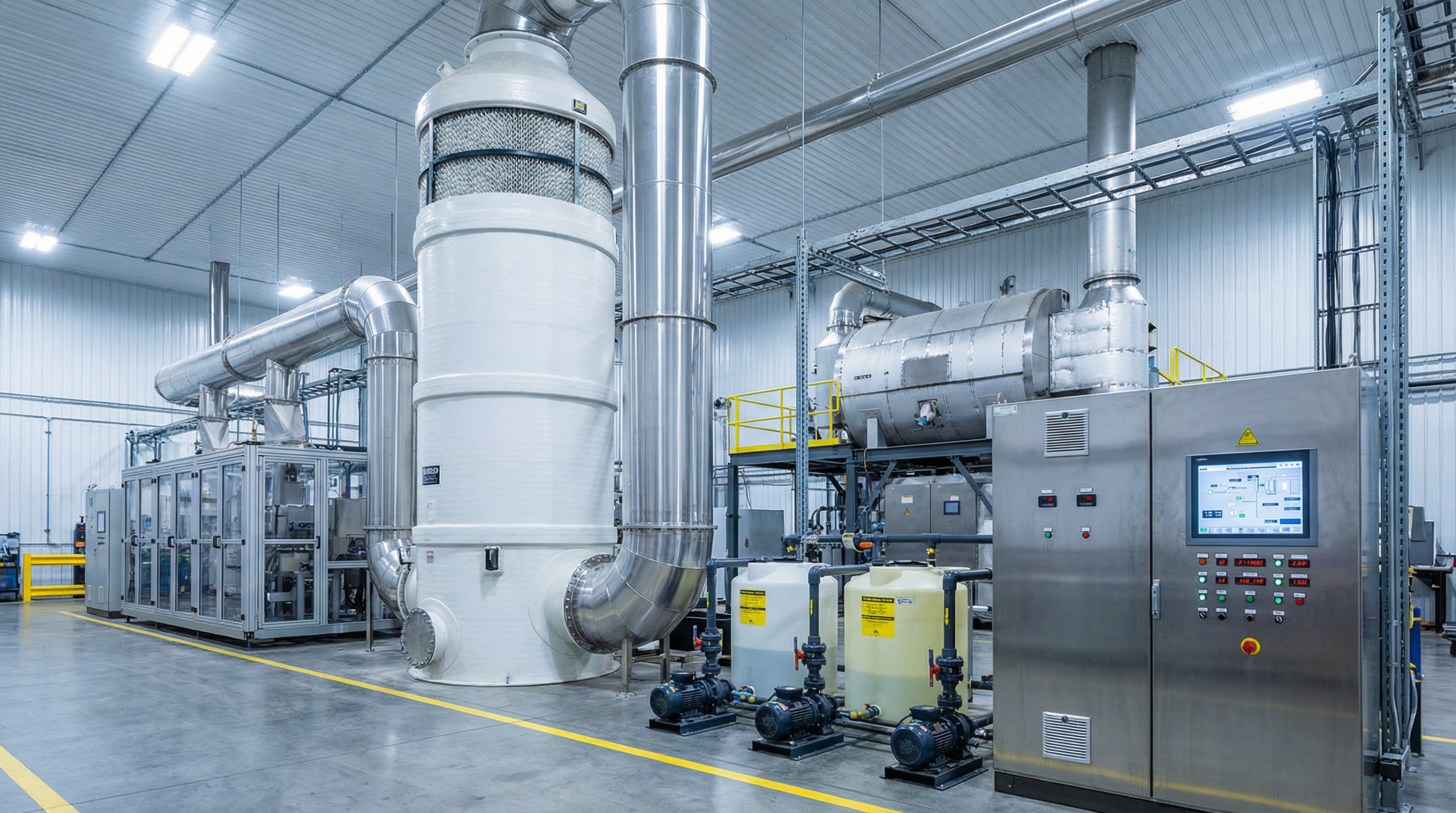
VOC scrubber systems require careful engineering to match process exhaust characteristics, chemical compatibility, and regulatory requirements. Proper integration with existing production infrastructure ensures reliable long-term performance.
Proper sizing based on maximum exhaust flow and VOC loading. Tower diameter, packing height, and liquid-to-gas ratio are calculated for each application.
Corrosion-resistant materials — FRP, PP, CPVC, or stainless steel — are selected based on chemical exposure and operating temperature requirements.
Scrubbers can be paired with Regenerative Thermal Oxidizer (RTO) or Catalytic Oxidizer (RCO) systems for combined VOC removal and destruction, achieving higher overall treatment efficiency for complex exhaust streams.
Selecting the appropriate VOC control technology depends on VOC characteristics, regulatory requirements, and process constraints.
Explore: Regenerative Thermal Oxidizer (RTO) Systems | VOC Treatment Systems
Common technical questions from environmental engineers and procurement teams evaluating VOC scrubber systems.
VOC scrubber efficiency depends on VOC solubility, liquid chemistry, and contact design. Properly engineered systems achieve high removal rates for targeted soluble or reactive compounds. For mixed or insoluble VOC streams, integration with a Regenerative Thermal Oxidizer (RTO) may be required to meet stringent regulatory limits.
A VOC scrubber removes VOCs by absorbing them into a scrubbing liquid through gas–liquid mass transfer. An RTO system oxidizes VOCs thermally at high temperatures (800–1,000 °C), converting them to CO₂ and H₂O. Scrubbers are preferred for soluble VOCs at lower concentrations; RTOs are suited for high-volume, mixed VOC exhaust streams requiring complete destruction.
Scrubbers are most effective for soluble, reactive, or acid/base VOCs when correct liquid chemistry is applied. Examples include water-soluble solvents, acidic or alkaline organic compounds, and reactive halogenated VOCs. Poorly soluble hydrocarbons (e.g., toluene, xylene) are less effectively treated by scrubbing alone and may require thermal oxidation.
Yes. With appropriate design margins and automated control strategies — including variable-speed recirculation pumps and flow monitoring — VOC scrubbers can accommodate fluctuating process exhaust volumes. Systems are typically designed for peak flow conditions with turndown capability for lower-load operation.
Technology selection depends on VOC chemical characteristics (solubility, reactivity), regulatory emission limits, exhaust volume, energy availability, and integration with existing infrastructure. Scrubbers are preferred for specific soluble VOC compounds; RTO systems are preferred for high-volume mixed VOC streams requiring >95% destruction efficiency. Combined scrubber + RTO configurations are used for complex multi-compound exhaust. See also: FAQs: RTO & VOC Treatment.
Specify your exhaust flow, VOC concentration, and process details. Our engineering team will evaluate your requirements and recommend the appropriate VOC scrubber or combined treatment solution.
Overview of industrial VOC treatment technologies including scrubbers, oxidizers, and integrated systems for exhaust gas compliance.
Regenerative Thermal Oxidizer systems for high-efficiency VOC destruction with up to 95% thermal energy recovery for industrial exhaust streams.
VOC emission control solutions for automotive coating lines, paint booths, and surface treatment processes in vehicle manufacturing facilities.
VOC abatement solutions for chemical manufacturing plants, reactor vent treatment, and solvent recovery in chemical production processes.
Our engineering team will respond within 24 hours.