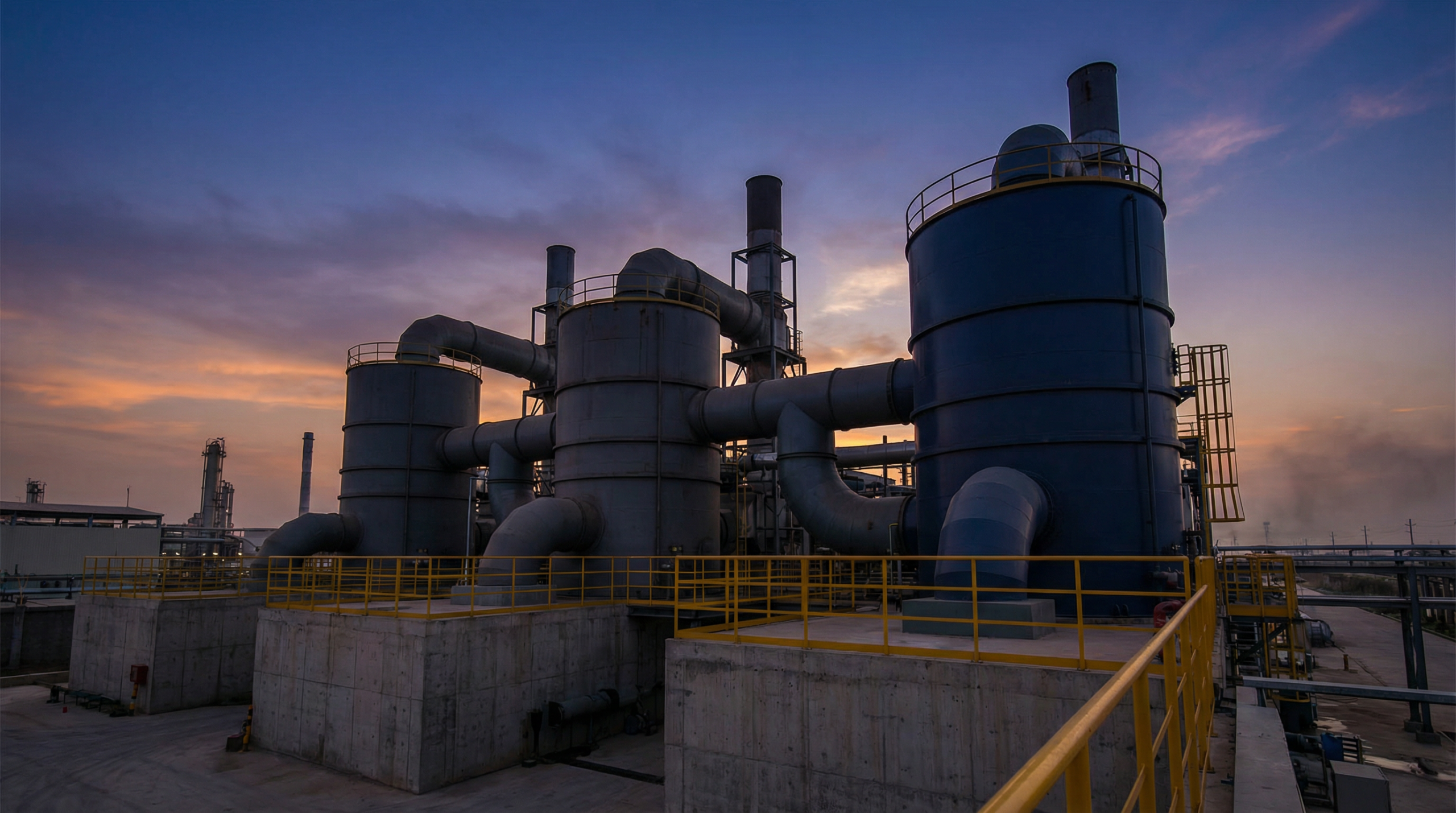
Industrial VOC Abatement System RTO Facility

Industrial VOC Abatement System Engineering Company

Engineering-driven RTO and VOC treatment systems for global industrial compliance.

Company Overview


Industrial manufacturing processes generate volatile organic compound (VOC) emissions that must comply with increasingly strict environmental regulations. Effective VOC control requires not only equipment supply, but also engineering expertise in airflow design, combustion control, heat recovery, and system integration.

We are a specialized industrial VOC abatement system manufacturer, focused on Regenerative Thermal Oxidizers (RTO), Catalytic Oxidizers (RCO), scrubbers, carbon adsorption units, and integrated exhaust gas treatment systems.

Our role extends beyond equipment fabrication. We provide engineered VOC control solutions tailored to plant-specific process conditions, ensuring regulatory compliance, stable operation, and optimized energy performance.
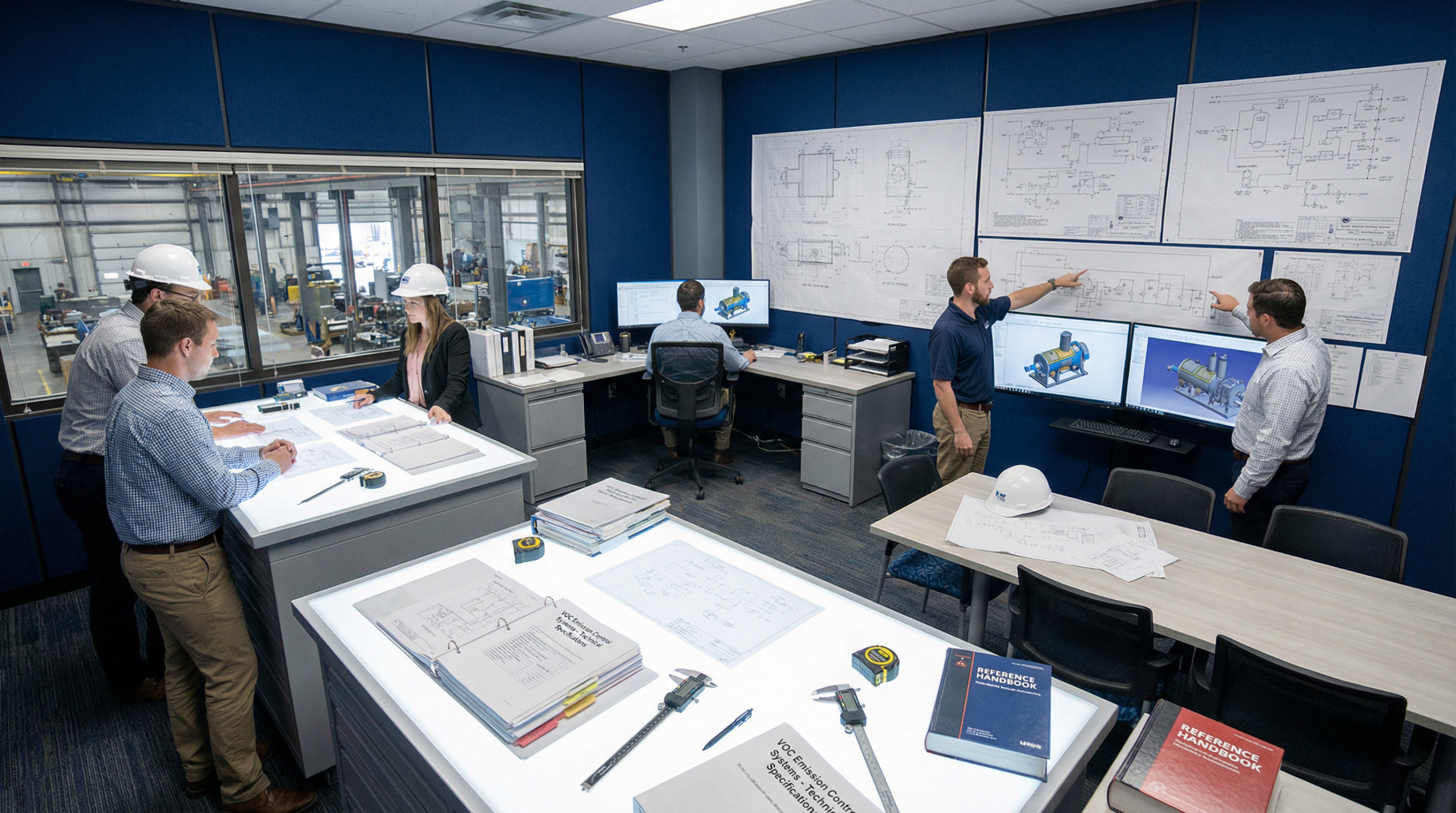
VOC abatement system engineering team reviewing RTO design drawings

Core Technology Systems

Engineered VOC abatement solutions designed for industrial process compliance and operational efficiency.

Regenerative Thermal Oxidizer (RTO)

High-efficiency thermal oxidation systems for medium to high VOC concentration exhaust streams. Multi-chamber heat recovery design with destruction efficiency ≥99%.

Catalytic Oxidizer (RCO)

Catalytic oxidation systems operating at lower temperatures to reduce fuel consumption while maintaining stable VOC removal efficiency for applicable exhaust compositions.

Integrated VOC Treatment

Multi-stage systems combining pre-filtration, wet scrubbers, carbon adsorption, and thermal oxidation for complex exhaust streams requiring comprehensive treatment solutions.

Engineering Capability at Scale

200+

Installed VOC Systems

Industrial installations worldwide

5,000–150,000

Nm³/h Airflow Range

Scalable system capacity design

≥99%

VOC Destruction Efficiency

Validated by Factory Acceptance Testing

Global Supply

Multi-Region Project Coverage

Asia · Europe · North America · Middle East
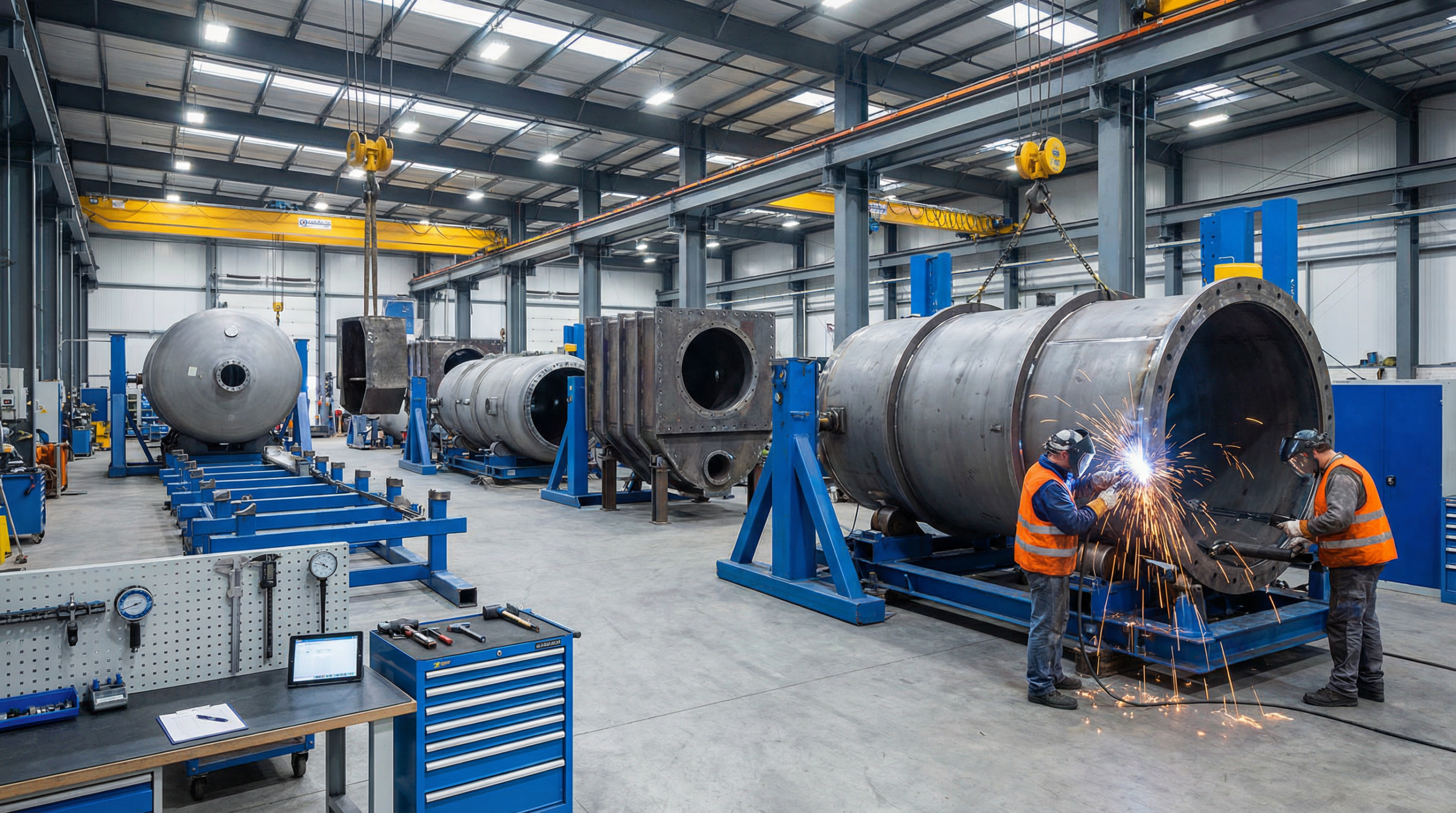
Industrial VOC abatement system manufacturing workshop with steel fabrication

Manufacturing & Quality Control


We operate structured fabrication and quality management processes to ensure each system meets engineering specifications before deployment. Every unit undergoes Factory Acceptance Testing prior to shipment.

High-temperature steel structure fabrication
Precision ceramic bed assembly
Explosion-proof electrical integration
PLC-based control system configuration
Factory Acceptance Testing (FAT)
Performance validation before shipment

Engineering Workflow

A structured process from emission data evaluation to lifecycle support — ensuring each project is technically sound and operationally reliable.

01
Emission Data Evaluation
Process data collection and airflow calculation. We evaluate VOC composition, concentration range, exhaust volume, and temperature to establish the engineering basis for system design.
02
Technical Solution Design
System sizing, combustion chamber modeling, and energy recovery calculation. Layout drawings and P&ID documentation are prepared for client review and regulatory submission.
03
Manufacturing & Assembly
Controlled production with quality inspection at each stage. Steel structure fabrication, ceramic media installation, and PLC control system integration are completed in sequence.
04
Installation & Commissioning
On-site installation guidance and system performance validation. Commissioning includes burner calibration, valve sequencing verification, and emission measurement confirmation.
05
Lifecycle Support
Spare parts supply, ceramic media replacement, burner optimization, and control system upgrades. Long-term technical support to maintain system performance and compliance.

Industries We Serve

Our VOC abatement systems are deployed across a range of industrial sectors with distinct emission profiles and compliance requirements.
Automotive Manufacturing
Coating line exhaust treatment, paint booth VOC control
Chemical Industry
Process exhaust treatment, solvent recovery and oxidation
Printing Industry
Ink solvent exhaust control for flexographic and gravure printing
Electronics Manufacturing
Cleaning agent and solvent emission control in PCB production
Pharmaceutical Production
Solvent exhaust treatment in API and formulation manufacturing
Industrial Exhaust Gas
General industrial process exhaust treatment and compliance
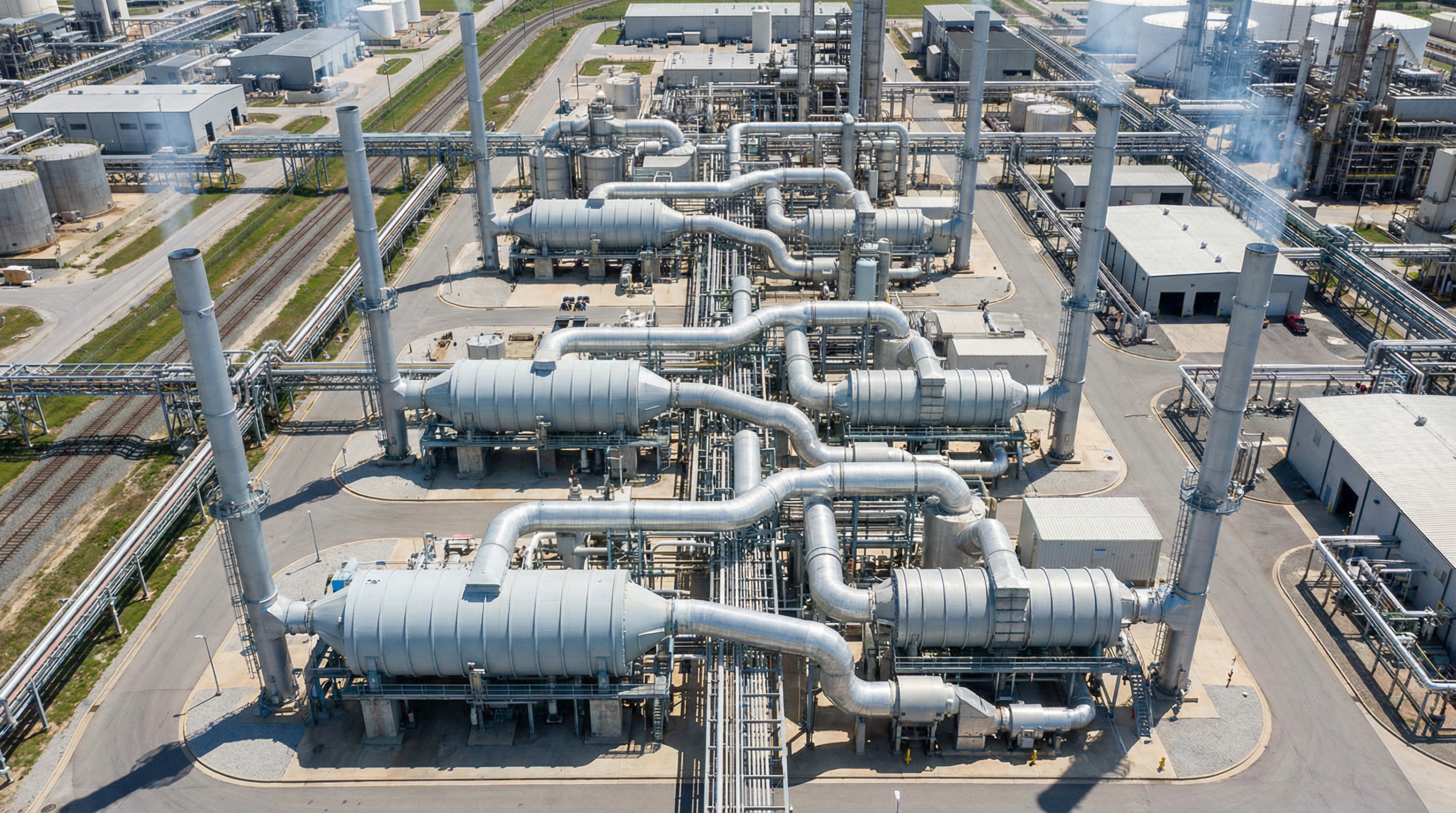
Global RTO and VOC abatement system installations aerial view

Global Project Experience

Our VOC abatement systems have been installed across industrial facilities in Asia, Europe, North America, and the Middle East. Each project is supported by documented performance data and technical commissioning records.

Engineering & Compliance Expertise

Technical depth across thermal oxidation engineering, industrial automation, and environmental compliance design.

Engineering Team Background

Our technical team combines mechanical engineering, environmental engineering, and industrial process expertise to deliver technically sound and compliant solutions.

  • Thermal oxidation engineers
  • Combustion control specialists
  • Industrial airflow design engineers
  • PLC automation engineers
  • Explosion safety design specialists

Compliance & Environmental Responsibility

Each project includes documented performance parameters and technical documentation for regulatory review. Systems are designed in accordance with applicable standards.

  • Local environmental emission regulations
  • Explosion safety standards
  • Industrial combustion control requirements
  • EU and North American emission standards
  • EPC contractor documentation support

Why Industrial Clients Work With Us

  • Engineering-driven design approach
  • Customization based on process data
  • Strong integration capability with production lines
  • Focus on long-term operational reliability
  • Structured technical documentation support

Frequently Asked Questions

Technical and commercial questions about our VOC abatement systems and engineering services.

What differentiates your VOC abatement systems from standard equipment suppliers? +
Our systems are engineered based on plant-specific emission data rather than standardized generic configurations. We evaluate airflow volume, VOC composition, concentration range, and plant layout before finalizing any system design, ensuring the solution is matched to actual process conditions.
What is the difference between an RTO and an RCO system? +
A Regenerative Thermal Oxidizer (RTO) uses high-temperature thermal combustion (typically 760–850°C) with ceramic heat recovery beds to destroy VOCs. A Catalytic Oxidizer (RCO) uses a catalyst bed to enable oxidation at lower temperatures (typically 300–450°C), reducing fuel consumption for suitable exhaust compositions. The selection depends on VOC type, concentration, and energy cost considerations.
Can your systems comply with European and North American emission standards? +
Yes. Systems are engineered to meet regional emission compliance requirements. We provide technical documentation, performance test reports, and layout drawings to support regulatory review and permit applications in both EU and North American jurisdictions.
What is the typical VOC destruction efficiency of your RTO systems? +
Destruction efficiency typically reaches 99% or higher, depending on VOC composition, inlet concentration, and process stability. Each system is validated through Factory Acceptance Testing (FAT) before shipment, and performance is confirmed during on-site commissioning.
Do you support EPC contractors and OEM integrators? +
Yes. We provide technical documentation, layout drawings, P&ID diagrams, and commissioning guidance for EPC projects. Our systems can be integrated into larger plant engineering packages, and we work directly with EPC contractors and OEM equipment integrators throughout the project lifecycle.

Have additional technical questions? View full FAQ →

Discuss Your Industrial VOC Control Project

If you are planning a new installation or upgrading an existing VOC abatement system, our engineering team can provide a structured technical proposal based on your emission data.